
Something has quietly changed the way Nigerians search for information, and most businesses have not noticed yet.
A few years ago, if someone in Lagos wanted to find a reliable logistics company, a good skincare brand, or the best digital marketing agency in Nigeria, they opened Google and clicked through a list of links.
Today, a growing number of them are doing something very different. They are asking ChatGPT, using Google’s AI Overviews, typing into Perplexity, Meta AI, or Gemini, and getting a direct, synthesised answer that never requires them to click a single website.
Here is the uncomfortable truth: if your business is not part of that AI-generated answer, you do not exist for that customer. Not on page two. Not below the fold. Simply invisible.
This is not a future problem. It is happening right now, and Nigeria is at the centre of it.
According to findings presented at the Top Trends 2026 event at Marriott Hotel Ikeja, Nigeria has emerged as the world’s leading nation in artificial intelligence adoption and optimism, surpassing the United States, United Kingdom, and China.
ChatGPT is now the fifth most visited website in Nigeria, with users spending 30% more time on it than on Google.
Among young Nigerians, 66% are already using AI for shopping decisions, and 64% say they trust AI-generated recommendations either completely or somewhat.
The era of traditional SEO alone is no longer enough. What is replacing it, or more accurately, what is being layered on top of it, is called Generative Engine Optimization, or GEO.
This article explains exactly what GEO is, why it matters more to businesses in Nigeria than almost any other market in the world right now, and precisely what you need to do to make sure your brand is the one AI recommends.
What is Generative Engine Optimization (GEO)?
Generative Engine Optimization (GEO) is the practice of structuring your content and digital presence so that AI-powered search platforms, including ChatGPT, Google AI Overviews, Perplexity, Claude, Gemini, and Meta AI, can retrieve, cite, and recommend your brand when answering user questions.
If traditional SEO was about earning a spot among ten blue links on a Google results page, GEO is about earning a place among the two to seven sources that AI systems typically cite when they synthesise a response.
The competition is tighter. But when an AI engine names your brand in its answer, it delivers an implicit endorsement that no organic search listing ever could.
GEO is also known by several other names, Answer Engine Optimization (AEO), AI Optimization (AIO), Large Language Model Optimization (LLMO), and Generative Search Optimization (GSO).
The industry has not settled on one term, but they all describe the same goal: get your content cited and recommended by AI.
Before going further, it is important to clear up a common misconception.

GEO is not a replacement for SEO. It is an additional layer of strategy built on top of your existing SEO foundation. Strong SEO, good technical structure, quality content, credible backlinks, fast loading speed, remains the foundation that AI systems rely on when deciding which sources to reference.
Without solid SEO underneath, GEO efforts will not get far.
GEO vs SEO: What is the Difference?
Understanding the difference between GEO and traditional SEO is the first step to knowing what needs to change in your content strategy.
Traditional SEO
Traditional SEO optimises your website to rank as high as possible on Google’s standard results page. Success is measured in keyword rankings, organic clicks, and page visits. The goal is to appear in that list of ten blue links and get someone to click on your website.
GEO
GEO optimises your content to be retrieved, summarised, and cited by AI systems when they generate answers to user questions.
Success is measured in how often your brand is mentioned in AI-generated responses, how accurately AI describes your business, and whether that AI mention leads to brand awareness, direct traffic, and conversions downstream.
Here is the critical distinction: a page can rank number one on Google and still be completely ignored by AI if it lacks the structural elements that AI systems prioritise.
Equally, a page that is not ranking on page one of Google can still be cited by ChatGPT or Perplexity if it is structured correctly.
In 2026, both disciplines need to work together. Research confirms that the overlap between top Google links and AI-cited sources has dropped from 70% to below 20%.
AI systems are developing their own preferences for which sources to cite, and those preferences are different from Google’s ranking signals.
Why GEO Matters More for Businesses in Nigeria Than Almost Anywhere Else

Nigeria is not just following the global trend toward AI search. It is leading it, and that makes GEO an urgent priority for businesses in Nigeria right now, not in two or three years.
Nigeria is the World’s Number One AI Adopter
Research from the “Our Life with AI” 2026 report confirms that Nigeria ranks first globally in AI adoption and optimism.
Nigerian consumers, particularly young Nigerians between 18 and 35, have embraced AI tools faster than consumers in the United States, United Kingdom, and China.
This is the audience that businesses in Nigeria need to reach. And this audience is already searching via AI.
ChatGPT is Now the Fifth Most Visited Website in Nigeria
That is not a niche statistic.
ChatGPT being the fifth most visited website in Nigeria, ahead of most Nigerian news sites, e-commerce platforms, and service directories, means that a significant and growing share of consumer discovery is now happening inside AI interfaces, not on Google’s results page.
66% of Young Nigerians Use AI for Shopping
Among Nigerian consumers aged 18 to 35, two-thirds are already using AI tools during their shopping and purchase decision journeys.
They are asking ChatGPT and Meta AI for recommendations on products, services, agencies, and brands. If your business is not being recommended in those AI answers, you are losing ground to competitors who are.
Early Movers Will Win Disproportionate Visibility
GEO is still early-stage in the Nigerian market. Most businesses in Nigeria have never heard of it.
This means that the businesses and agencies that build GEO into their content strategy right now will establish AI citation authority before their competitors even understand what is happening. First-mover advantage in GEO is significant, and it is available in Nigeria right now.
How AI Search Engines Actually Work (And Why it Changes Everything)
To understand GEO, you need to understand how AI search engines are fundamentally different from traditional search engines.
How Traditional Search Engines Work
Traditional search engines like Google index your website, analyse your content and backlinks, and assign a ranking position. When a user searches, Google presents a list of ranked pages. The user chooses which link to click. Your success depends on being high enough in that list to get clicked.
How AI Search Engines Work
AI search engines work completely differently. When a user asks a question, here is what happens:
Query Fan-Out
The AI does not simply search for the exact phrase typed. It breaks the question into multiple smaller sub-queries and searches for each one separately.
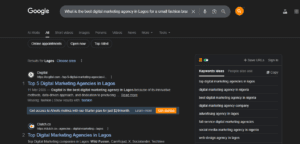
If someone asks “What is the best digital marketing agency in Lagos for a small fashion brand?”, the AI might simultaneously search for “best digital marketing agencies Lagos,” “digital marketing for fashion brands Nigeria,” and “small business marketing agency Lagos” as three separate queries.
Information Retrieval
The AI pulls content from the web and its own knowledge base using a technique called Retrieval-Augmented Generation (RAG). It extracts specific passages from web pages and feeds them to the language model as context.
Synthesis
The AI combines information from multiple sources into a single, coherent, conversational response, and typically cites two to seven sources. The user gets one answer, not a list of links.
This three-step process completely changes what “being visible” means for a Nigerian business. Your goal is no longer to rank in a list. Your goal is to be the source that AI selects, trusts, and cites when it assembles that single answer.
The 7 Core GEO Strategies Businesses in Nigeria Need to Implement
You do not need to rebuild your website or hire a tech team. These seven strategies work with what you already have, and the earlier you start, the harder they are for competitors to catch up with.
1. Make Sure AI Can Actually Crawl Your Website
This sounds obvious, but it is the most common problem that prevents GEO from working. AI systems need to be able to read your pages before they can cite them.
What to check:
- Review your robots.txt file. Many Nigerian websites block AI crawlers without realising it. If you use Cloudflare, which many Nigerian websites do, check that it has not automatically blocked AI bot traffic.
- Ensure your important content is server-side rendered. AI crawlers cannot read content that loads via JavaScript after the page opens. If your key service descriptions or about page content only loads after a JavaScript trigger, AI bots cannot see it.
- Make sure content is not locked behind logins, pop-ups, or paywalls.
- Consider creating an llms.txt file, a simple text file that helps AI systems understand your site structure. This is an emerging standard in 2026 that forward-thinking websites are beginning to adopt.
2. Structure Your Content Around Questions, Not Just Keywords
This is the single biggest tactical shift in GEO versus traditional SEO. Traditional SEO rewards content optimised around specific keyword phrases.
GEO rewards content structured around the actual questions your audience is typing into AI tools.
How to implement this:
Think about what your potential customers are asking ChatGPT, Meta AI, or Perplexity right now.
A business owner in Lagos considering hiring a digital marketing agency might ask: “What should I look for in a digital marketing agency in Nigeria?” or “How do I know if a digital marketing agency in Lagos is legitimate?”
Your content should answer these questions directly and completely, with the answer placed in the first two to three sentences of the relevant section, before any additional context.
AI systems extract answers from the beginning of sections, not from the middle or end. This is called Answer-First writing, and it is one of the most important structural changes you can make.

Practical tip: Format your H2 and H3 subheadings as actual questions, the same questions your audience is asking.
When a user types that question into Perplexity and your page has that exact question as a heading followed by a clear and direct answer, your content has a significant advantage over a page that buries that information in paragraph three of a general section.
3. Build Genuine Authority and Expertise Signals (E-E-A-T)
AI systems heavily prioritise sources that demonstrate Experience, Expertise, Authoritativeness, and Trustworthiness, the same E-E-A-T signals that Google values, but applied with even greater weighting in AI citation decisions.
What this means for businesses in Nigeria:
- Author credentials matter: If your blog articles are written by named experts with verifiable backgrounds, AI systems are more likely to cite them. Anonymous or clearly AI-generated content without human authority signals performs poorly in GEO.
- Case studies and original data are powerful: Content that contains original research, proprietary data, or documented client results gives AI a reason to cite you over generic competitors. Oxgital’s case studies, Alayo’s 500% ROAS, Tursan Energy’s market launch, MRS Oil’s brand growth, are exactly the type of unique, verifiable content that AI systems are trained to value and cite.
- Third-party mentions build citation authority: Being mentioned, quoted, or cited on other reputable Nigerian websites, TechCabal, Nairametrics, BusinessDay, This Day Live, Stears, tells AI systems that you are a trusted source in the Nigerian market. Digital PR is therefore not just a brand-building exercise in 2026. It is a direct GEO strategy.
4. Use AI-Friendly Content Formats
Certain content formats are significantly more likely to be cited by AI systems than others. Research from early 2026 confirms that structured, list-format content accounts for 74.2% of all AI citations.
The content formats that AI loves:
- FAQs: A well-structured FAQ section with direct, factual answers is one of the most GEO-effective content formats available. Every service page and blog post on your website should include a relevant FAQ section.
- Numbered and bulleted lists: AI systems can easily extract and reformat list-based content into their synthesised answers. Dense paragraphs without structure are much harder for AI to parse and cite.
- Comparison tables: Tables that compare options, features, or pricing give AI structured data that is easy to extract and present to users.
- Definition boxes: Clear, concise definitions of industry terms are highly cited by AI because they provide exactly the kind of factual, extractable content that AI systems are designed to relay.
- Step-by-step guides: How-to content in a numbered sequence format aligns naturally with how AI systems present instructional answers.
What AI rarely cites: Pure brand service pages, standalone case studies without data, and long blocks of unstructured prose. Note that case study data embedded within well-structured articles performs significantly better than standalone case study pages.
5. Implement Schema Markup
Schema markup is code that you add to your website to help search engines and AI systems understand what your content means, not just what it says. In 2026, schema has become one of the most important technical signals for GEO performance.
The three most important schema types for businesses in Nigeria:
- FAQPage schema: Marks up your FAQ sections so AI systems can identify and extract them as structured question-and-answer pairs.
- Article schema: Tells AI systems that your content is a published article with an identifiable author, publication date, and topic.
- LocalBusiness schema: Critically important for businesses in Nigeria. This schema tells AI systems your business name, location (Lagos, Nigeria), services, contact details, and operating hours, making it far more likely that AI will accurately describe and recommend your business to local searchers.
If you use WordPress, plugins like Rank Math or Yoast SEO can help you implement schema without writing code manually.
6. Keep Your Content Fresh and Updated
AI systems significantly favour recently published or recently updated content over older articles that have not been touched. This is different from traditional SEO, where an old well-ranked article can maintain its position for years without updates.
Research from early 2026 data confirms that new content enters AI citation pools within three to five business days. However, content also decays, older articles lose citation priority without freshness updates. AI systems trust recency as a signal of accuracy and reliability.
What to do:
- Add a visible “Last Updated” date at the top of your key articles and service pages.
- Review your most important pages every 60 to 90 days and update any statistics, examples, or references that have become outdated.
- When you update a page, add a version note, for example: “Updated March 2026, added 2026 Nigerian market data.”
- For your most competitive content, consider a 30-day refresh cycle.
7. Build Your Brand’s Presence Beyond Your Own Website
One of the most important, and most overlooked, aspects of GEO is that AI systems build their understanding of your brand from sources across the entire internet, not just from your own website.
Where your brand needs to appear to build GEO authority:
- Google Business Profile: Keep your profile fully updated with accurate business name, address, category, services, and recent posts. AI systems pull heavily from Google Business Profile data when answering local search queries.
- Online reviews: AI heavily weighs user-generated reviews when making recommendations. Google reviews, Trustpilot mentions, and social proof on platforms like Facebook are all signals that AI interprets as indicators of brand quality and trustworthiness. Actively encourage detailed, specific reviews from your clients.
- Industry directories: Being listed accurately on platforms like Clutch, DesignRush, Sortlist, and relevant Nigerian business directories helps establish your entity as a recognised, verifiable business in AI knowledge graphs.
- Social media profiles: Consistent, active profiles on LinkedIn, Instagram, X (formerly Twitter), and Facebook reinforce your brand entity across the platforms where AI systems gather information.
- Media mentions and digital PR: Being cited, quoted, or referenced in Nigerian media publications and industry blogs is one of the strongest GEO authority signals available. A single mention in TechCabal or BusinessDay carries significant weight in how AI systems perceive your brand’s authority.
How to Know if Your GEO Strategy is Working

Traditional SEO metrics, keyword rankings, organic clicks, bounce rate, only tell part of the story in 2026. To measure GEO performance, you need to track different signals.
AI Citation Monitoring
The most direct measure of GEO success is how often your brand appears in AI-generated answers. You can check this manually by typing your target queries into ChatGPT, Perplexity, Google AI Overviews, and Gemini and noting whether your brand is mentioned or cited.
For systematic tracking, tools like Semrush’s AI visibility features, BrightEdge, or Frase can automate this monitoring across multiple AI platforms.
Branded Search Volume
One of the strongest indirect signals of GEO performance is an increase in branded search volume on Google, people typing your business name directly into Google after hearing about you through an AI recommendation.
If your GEO efforts are working, you should see branded Google searches increase over time even if your direct traffic from AI citations does not show up clearly in Google Analytics.
Direct Traffic Increases
Users who discover your brand through an AI recommendation and then visit your website directly will show up as direct traffic in your analytics. A sustained increase in direct traffic alongside GEO efforts is a strong signal that AI is driving brand awareness.
Assisted Conversions
Track users who discovered your brand via AI search and then converted through another channel later, organic search, social media, or direct visit. As your AI tracking setup matures, this customer journey will become clearer.
GEO for Businesses in Nigeria: A Practical Starting Point
If you are a business owner in Nigerian, or marketer reading this and wondering where to start, here is a simple priority order:
Week 1 – Technical Foundation: Check your robots.txt file and ensure AI crawlers are not blocked. Verify your Google Business Profile is fully complete and accurate. Implement FAQ schema on your key service pages.
Week 2 – Content Restructuring: Rewrite the introductions of your five most important pages and blog posts to lead with direct, extractable answers. Convert any long unstructured paragraphs into bullet points, numbered lists, or short subheadings with direct answers underneath.
Week 3 – FAQ Creation: Add a comprehensive FAQ section to every service page on your website. Write each question the way a real customer would type it into ChatGPT or Google.
Week 4 – Authority Building: Begin a systematic review management process, ask satisfied clients for detailed Google reviews. Identify two or three Nigerian media publications or industry blogs where you could contribute an expert article or be quoted as a source.
Ongoing – Freshness and Monitoring: Set a 60-day calendar reminder to update your most important content pages. Begin checking your brand’s AI citation performance monthly across ChatGPT, Perplexity, and Google AI Overviews.
GEO and SEO: How They Work Together

It is important to repeat: GEO does not replace SEO. The most effective digital visibility strategy in 2026 is one that integrates both.
Strong traditional SEO, well-structured pages, quality content, credible backlinks, fast loading speed, strong domain authority, creates the foundation that AI systems rely on when deciding which sources to reference.
AI systems cannot cite content they cannot find, read, or trust. Your SEO work directly supports your GEO potential.
At the same time, GEO-specific improvements, answer-first writing, FAQ schema, structured formats, freshness signals, entity building, enhance your content in ways that Google’s traditional algorithm also rewards. The two disciplines reinforce each other.
Think of traditional SEO as building the road. GEO is making sure your brand is the destination that AI sends people to when they travel it.
Frequently Asked Questions
What is Generative Engine Optimization (GEO)?
Generative Engine Optimization (GEO) is the practice of structuring your content and online presence so that AI-powered search platforms, such as ChatGPT, Google AI Overviews, Perplexity, Gemini, and Meta AI.
Is GEO replacing SEO?
No. GEO complements traditional SEO rather than replacing it.
Why does GEO matter specifically for businesses in Nigeria?
Nigeria is ranked number one globally in AI adoption and optimism. ChatGPT is the sixth most visited website in Nigeria, and 66% of young Nigerians are already using AI tools for shopping and discovery decisions.
How long does it take for GEO strategies to show results?
New or updated content typically enters AI citation pools within three to five business days.
What types of content work best for GEO?
Structured content formats perform significantly better in AI citations than unstructured prose. The most effective formats include FAQ sections with direct answers, numbered and bulleted lists, comparison tables, clear definitions, step-by-step how-to guides, and content that leads each section with a direct answer before providing additional context.
Do I need technical skills to implement GEO?
Some GEO improvements, such as adding schema markup, benefit from technical knowledge or a web developer.
Can small businesses in Nigeria compete with larger brands in AI search?
Yes. AI systems prioritise authority, clarity, and credibility over company size. A well-structured, genuinely helpful article from a Lagos-based SME that answers a specific question directly and accurately can be cited by AI ahead of a large brand’s generic service page.
Conclusion
The way Nigerian consumers discover, evaluate, and choose businesses is changing faster here than almost anywhere else in the world. Nigeria’s position as the global leader in AI adoption is not a temporary statistic, it reflects a deep, structural shift in how people search for information and make decisions.
For businesses in Nigeria, this is not a trend to monitor from a distance. It is an opportunity to act on right now, before competitors understand what is happening.
GEO is not complicated. It does not require starting over. It requires being more intentional about how you create and structure your content, how you build your brand’s presence across the internet, and how you demonstrate the kind of expertise and trustworthiness that AI systems are trained to recognise and recommend.
The businesses that invest in GEO today will earn compounding advantages as AI search becomes the primary way Nigerian consumers discover who to buy from, who to trust, and who to hire.
Your brand should be the answer AI gives them.
If you need help implementing a GEO and SEO strategy that positions your Nigerian business for visibility in both traditional and AI-powered search, get in touch with the Oxgital team and let’s build a growth system that works across every channel your customers are using.