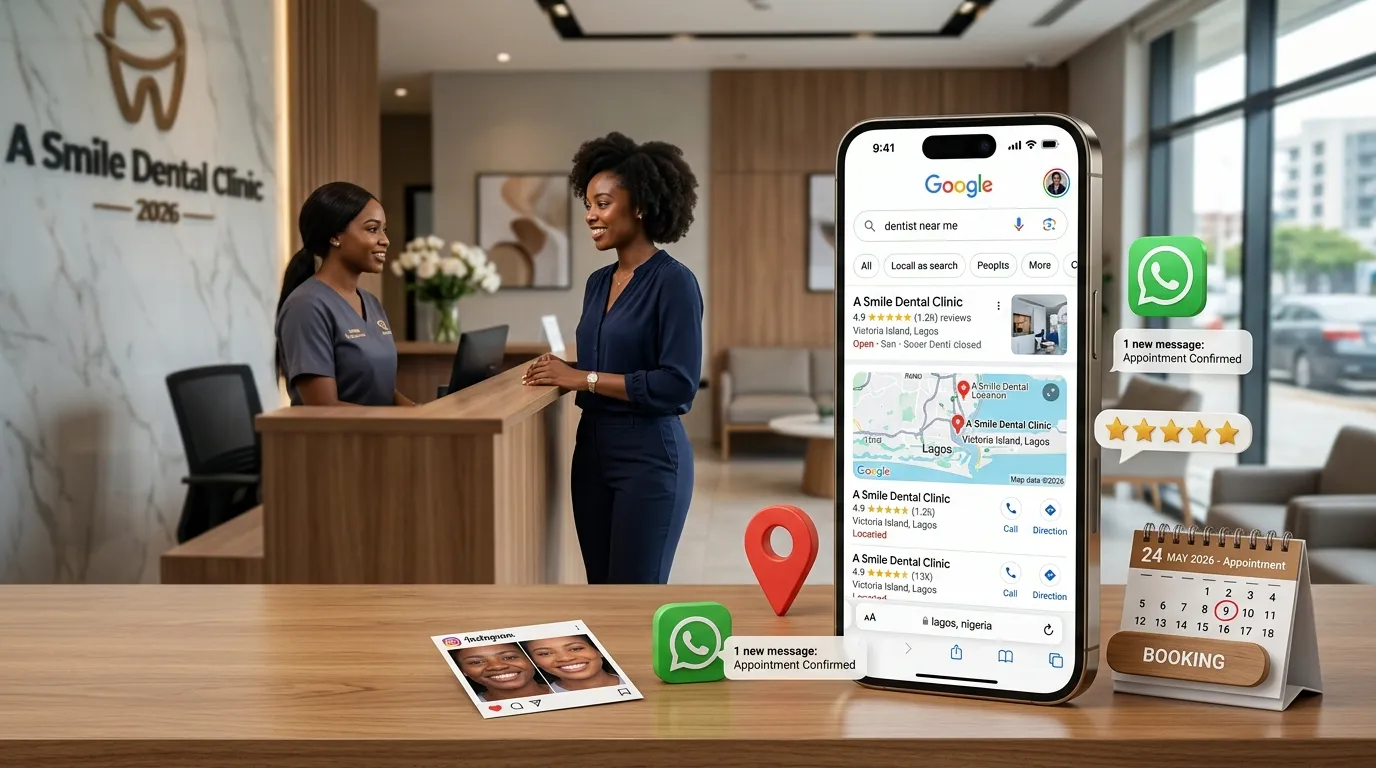
If you’re running a business in Nigeria and looking for customers, you already know the problem. You spend money on marketing. You run ads, post on social media, and send emails. Activity happens. Nothing turns into actual inquiries or sales.
The real issue isn’t effort. It’s that you’re not using a system. Lead generation for Nigerian businesses isn’t magic. It’s the right channels, clear messaging, consistent execution, and measurement. Once you understand how to structure lead generation, you stop chasing ghosts and start filling your pipeline with actual prospects.
This article walks you through 15 strategies that work specifically in the Nigerian market context. Some are free. Some cost money. All of them require clarity about who you’re trying to reach and why they’d care about what you’re offering. By the end, you’ll know exactly which strategies fit your business and how to start testing them this week.
What Lead Generation Actually Means
Let’s start with the definition, because a lot of people get this wrong.
Lead generation is the process of attracting potential customers and converting them into leads, people who express interest in your product or service. A lead isn’t just a name in a spreadsheet. It’s someone who has shown enough interest that you can reach out to them, have a conversation, and potentially turn them into a paying customer.
Nigeria has 109 million internet users as of early 2025, according to DataReportal. The pool exists. But finding them, getting their attention, and convincing them to share their contact information? That requires strategy, not luck.
Most Nigerian business owners conflate activity with results. You post 10 times a week on Instagram and think you’re doing lead generation. You spend ₦200,000 on ads without a clear offer and wonder why nothing converts. You collect email addresses but never follow up. None of that is lead generation. It’s just noise.
Real lead generation is:
- Identifying who your ideal customer is
- Finding where they spend time (which platform, which community, which conversation)
- Creating an offer that makes them want to give you their contact information
- Following up and nurturing until they’re ready to buy
Everything below is a variation of these four steps.
Why Nigerian Businesses Struggle With Lead Generation
Lead generation is harder in Nigeria for specific reasons. Acknowledging them makes the work clearer.
First, there’s the trust deficit. Many Nigerian consumers have been burned by agencies that promised results and delivered nothing. They want proof. They want to see real results from real clients before they commit.
Second, budget constraints are real. Most SMEs don’t have ₦2 million monthly for advertising. They’re working with ₦100,000 to ₦500,000. When your budget is tight, you can’t afford to experiment blindly. Every naira needs to be justified.
Third, the digital landscape is fragmented. Nigerians use WhatsApp, Instagram, TikTok, Facebook, Google, LinkedIn, and more. But they don’t use them equally. A 45-year-old business owner checks Facebook and LinkedIn. A 22-year-old fashion entrepreneur lives on TikTok and Instagram. A B2B service provider might get more inquiries from WhatsApp than from any ad platform. Pick the wrong channel, and you waste your entire budget.
Fourth, internet reliability varies. Power cuts, data speeds, and network congestion affect both your ability to run campaigns and your audience’s ability to engage. An email automation sequence that works in the US might fail in Nigeria if someone doesn’t have a consistent internet connection.
The best lead generation strategies for Nigerian businesses account for all of these constraints. That’s where working with an agency experienced in the Nigerian market makes the difference.
Strategy 1: Define Your Ideal Customer Profile With Brutal Clarity
This is where everything starts. Most businesses skip this step and jump straight to ads or content. They pay the price.
Before you generate a single lead, you need to know exactly who you’re trying to reach. Not “anyone who might be interested.” Specific.
Write down:
- Industry, job title, and company size
- Age, location, and income level
- The specific problem they’re trying to solve
- How they currently try to solve it
- Why do they fail at solving it
- Why they might care about your solution
- Where they spend time online
Example: If you run a digital marketing agency in Lagos, your ideal customer might be: “A founder of a fast-growing B2B SaaS company, aged 28 to 40, based in Ikoyi, Lekki, or Victoria Island. They’ve built a product that works, but they’re frustrated because only 15-20% of their website traffic converts. They tried hiring a junior marketer. That didn’t work. They’ve looked at agencies but don’t trust them because they can’t see clear case studies. They check LinkedIn daily and read industry newsletters. They make decisions based on conversations with peers and proof of results.”
That’s a real profile. That’s usable.
Once you know who you’re chasing, everything else becomes easier. You know which platforms to use. You know what language to use. You know which problems to emphasize. You know when and how to reach out.
Without this clarity, you’re just throwing darts blindfolded.
Strategy 2: Build Your Authority Through Content That Solves Problems
Content marketing is the oldest, least glamorous, but most reliable way to generate leads. It builds trust before you ever ask for anything.
The key is making your content useful. Not promotional. Not listicles that rank for keywords but teach nothing. Real content that solves a real problem your target customer faces.
Start a blog. Write about the problems your customers have. Walk them through how to diagnose it. Show them different ways to solve it. Then show them why hiring you is the best version of that solution.
Example: You’re a web designer in Port Harcourt. Write “Why Most Nigerian E-Commerce Sites Fail to Convert Visitors” and walk through the exact technical and design reasons why. Every problem you mention is something you fix. By the end, they’re thinking, “This person gets it. I should talk to them.”
Share your content on LinkedIn, Twitter, and in relevant WhatsApp and Facebook groups. Use search engine optimization so when someone searches “how to improve website conversions in Nigeria,” your article shows up.
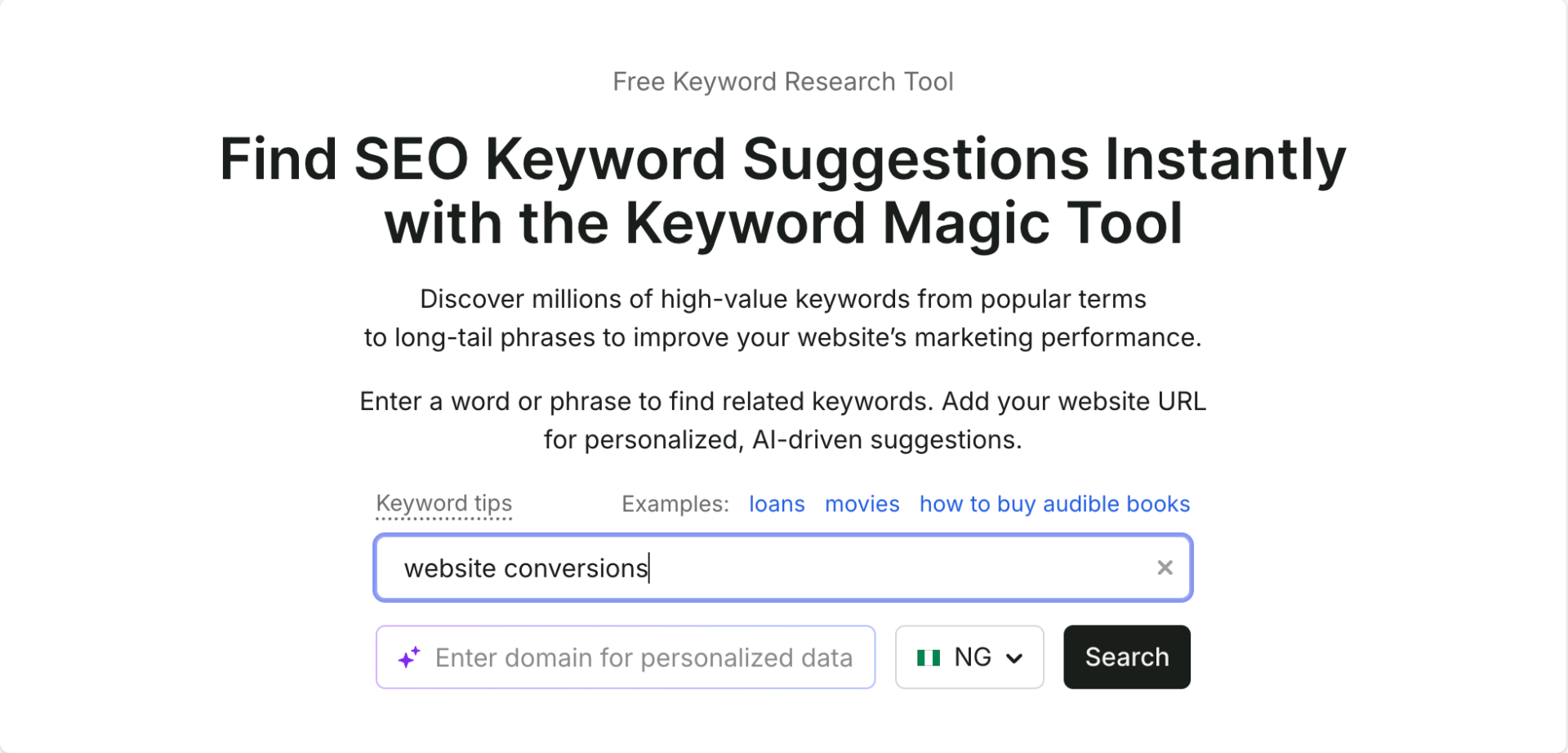
Before creating content, research what your audience is actually searching for. Using Semrush’s Keyword Magic Tool can help you discover high-intent keywords relevant to your business, while Topic Research can uncover common questions and content ideas that match search intent.
This doesn’t generate leads overnight. Six months in, you’ll start getting inquiries from people who found your content and thought you’re worth talking to.
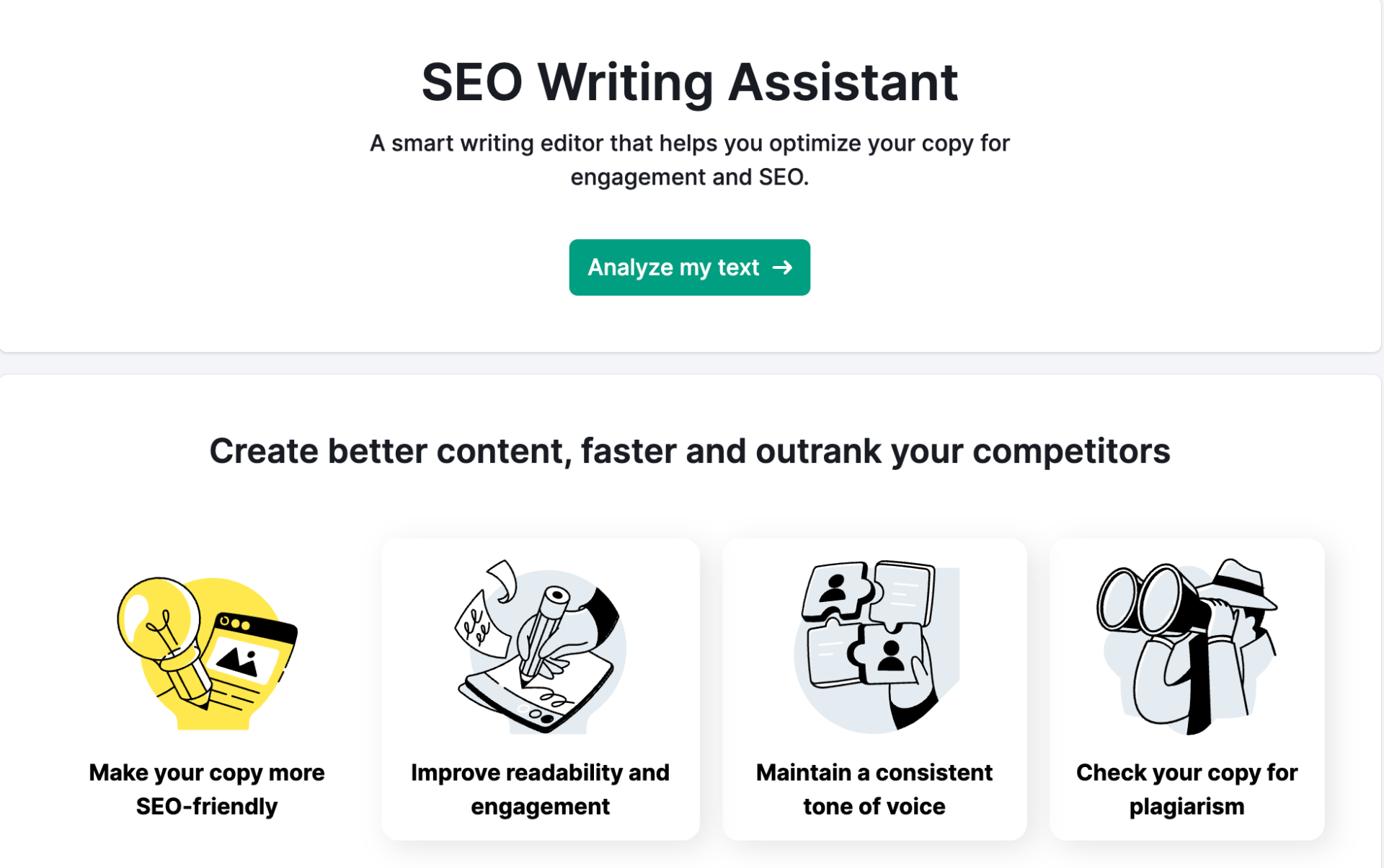
As you write, make sure your content is optimized for both readers and search engines. The Semrush SEO Writing Assistant can help improve readability, keyword usage, and on-page SEO before you publish.
Strategy 3: Create Lead Magnets That Attract Real Interest
A lead magnet is something free and valuable that you offer in exchange for someone’s contact information. It’s the hook that converts a casual visitor into a lead.
The trap most Nigerian businesses fall into is making the lead magnet too generic. You offer a free guide called “10 Tips for Growing Your Business” and then wonder why no one signs up.
Make it specific and valuable. Instead of generic tips, offer something people immediately want to use.
Examples:
- A checklist for auditing your website’s conversion rate
- A template for a content calendar for Instagram
- A calculator that shows what your customer acquisition cost should be
- A case study breaking down exactly how a similar business went from zero to profitable
Put the lead magnet behind a simple form that asks for name, email, and phone number. When someone submits, immediately send them the resource and add them to an email follow-up sequence.
The best lead magnets for Nigerian businesses are downloadable PDFs, Excel templates, and checklists. Why? Because most Nigerians have inconsistent internet, they download and use offline.
Strategy 4: Optimize Your Website for Lead Capture
Your website is your most valuable asset in lead generation. Every piece of traffic you drive there is wasted if the site doesn’t convert visitors into leads.
The basic setup:
- Create a clear, value-driven headline that tells visitors why they should care
- Add clear call-to-action buttons throughout (Book a Call, Download Our Guide, Get a Free Audit)
- Include a simple form on every page that captures at least email and phone number
- Make sure the form actually works, and you’re receiving submissions
- Follow up with every submission within 4 hours
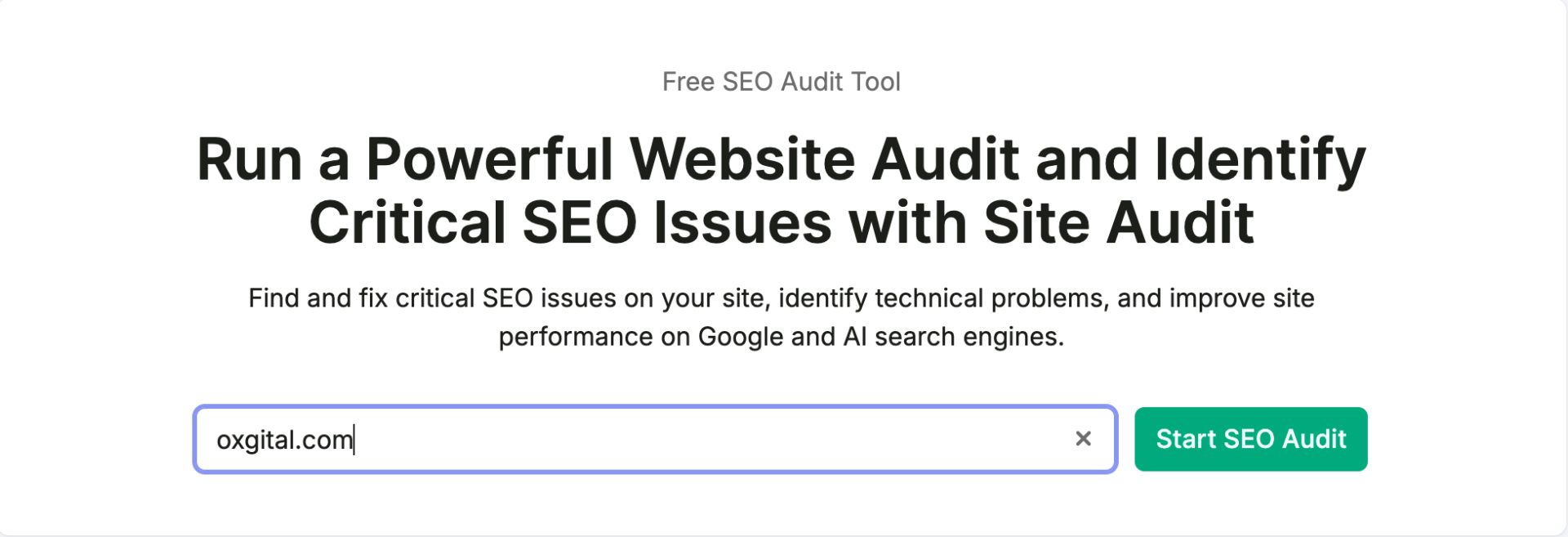
Beyond improving your messaging, regularly check your website for technical issues that can hurt conversions. Running a Site Audit with Semrush helps identify problems such as broken links, slow-loading pages, missing metadata, and other issues that affect user experience and search visibility.
Too many Nigerian businesses have beautiful websites that look good but generate zero leads. This is usually because:
- The website doesn’t clearly explain what the business does
- There’s no clear next step for visitors
- Forms are broken or missing
- There’s no follow-up system
Test your website yourself. Can you answer “what does this business do?” in 10 seconds? Can you easily find a way to contact them or request more information? If not, fix it.
Strategy 5: Leverage WhatsApp and SMS for Direct Outreach
Most Nigerian agencies and businesses are obsessed with Instagram and Facebook. But the real conversion happens on WhatsApp.
WhatsApp is where actual human conversations happen. People trust WhatsApp more than they trust email or ads. It’s personal, immediate, and expected as a communication channel.
Build your WhatsApp contact list by:
- Adding a WhatsApp button to your website (click to message)
- Including your WhatsApp number in your email signature
- Asking customers to connect with you on WhatsApp
- Using WhatsApp Business tools to set up automated welcome messages and away messages
When someone reaches out or expresses interest, respond on WhatsApp within minutes. The response time matters. A business that replies within 30 minutes gets 3x more conversions than one that takes 24 hours.
Strategy 6: Use Social Media for Audience Building and Nurturing
Social media isn’t where most Nigerian businesses get their first inquiry. It’s essential for building an audience that eventually becomes leads.
Pick one platform and own it. If you’re B2B, it’s LinkedIn. If you’re B2C, it’s Instagram or TikTok. If you’re service-based and local, it’s Facebook.
Post 3 to 5 times a week. Share what works: content that teaches or educates (60%), content that shows personality or behind-the-scenes (30%), promotional content (10%).
Engage with your audience. When someone comments, reply. When someone asks a question, answer thoroughly. Follow and engage with accounts in your industry. The goal isn’t to sell on Instagram. The goal is to build enough audience and enough trust that when someone needs what you offer, they remember you.
At Oxgital, we help businesses build structured social media strategies that turn followers into customers through consistent execution and clear messaging.
Strategy 7: Run Targeted Paid Ads on Meta (Facebook and Instagram)
Meta ads are powerful because you can target extremely specific audiences. The problem is that most Nigerian businesses run poorly structured campaigns that waste money.
Before you spend a naira on ads, answer these questions:
- Who are you trying to reach? (age, location, interests, job title)
- What are you offering? (lead magnet, product, service, consultation)
- Where are they sending traffic? (landing page, WhatsApp, email, contact form)
- How will you measure success? (cost per lead, conversion rate, ROI)
Start small. Budget ₦50,000 to ₦100,000 per month for testing. Create 3 to 5 different ad variations with different headlines, images, and messaging. Let them run for one week each.
Track which ones get the cheapest leads. Kill the losers. Double down on the winners.
Meta ads work best when you’re running them to an actual offer (a lead magnet, a consultation call, a product), not just to “awareness.” Nigerians see ads all day. They only click when they perceive an immediate benefit. Many businesses benefit from working with an experienced partner who can structure these campaigns correctly.
Strategy 8: Implement Google Search Ads for High-Intent Leads
Google Search ads show up when someone actively searches for what you’re offering. This makes them high-intent. Someone searching “digital marketing agency Lagos” or “SEO services Nigeria” is ready to buy.
Google Ads cost more per click than social ads, but the leads are hotter.
Steps:
- Identify the keywords people search when they want what you offer
- Create ads that speak directly to those searches
- Send traffic to a landing page optimized for conversion, not your homepage
- Start with a ₦200,000 to ₦300,000 monthly budget
- Track which keywords produce the best leads
- Increase the budget on winning keywords
Google Ads requires testing and iteration. Your first month might produce expensive leads. By month three or four, as you optimize, your cost per lead should drop by 40-50%.
Strategy 9: Build Strategic Partnerships and Referral Networks
Word-of-mouth is still the most trusted source of leads in Nigeria. People trust recommendations from friends, colleagues, and business owners more than they trust ads.
Identify businesses that serve your ideal customer but don’t compete with you. If you’re a web developer, partner with a digital marketing agency. If you’re an accountant, partner with a business consultant.
Create a referral agreement. When they refer a client to you, you pay them a commission or refer business back. Make it easy for them by giving them a one-pager about what you do, a link they can share, and a clear commission structure (usually 10-20% of the first deal).
The best referral partners are business owners with established networks. One referral from someone trusted beats 100 cold emails.
“You don’t need magic scripts. Just focus on doing what’s best for your clients. Show prospective clients the results you’re getting for existing ones, and your deal is closed.”
That insight came from a conversation on Reddit about lead generation for small businesses, and it’s the core of referral marketing. If your referral partner sees real results, they’ll keep referring. If they don’t, they’ll stop.
Strategy 10: Create and Share Case Studies
A case study proves that you’ve done what you’re claiming. It shows real results. It builds credibility in ways nothing else can.
Pick one of your best clients. Write a case study that walks through:
- The problem they had
- What you did
- The measurable result (more leads, higher revenue, faster process, better retention)
Make it specific. Don’t write “helped a brand grow sales.” Write “helped an e-commerce brand in Lagos increase monthly revenue from ₦500,000 to ₦1.2 million in six months using Facebook ads and email marketing.”
Share case studies on your website, in proposals to prospects, and on social media. Link to them from your landing pages.
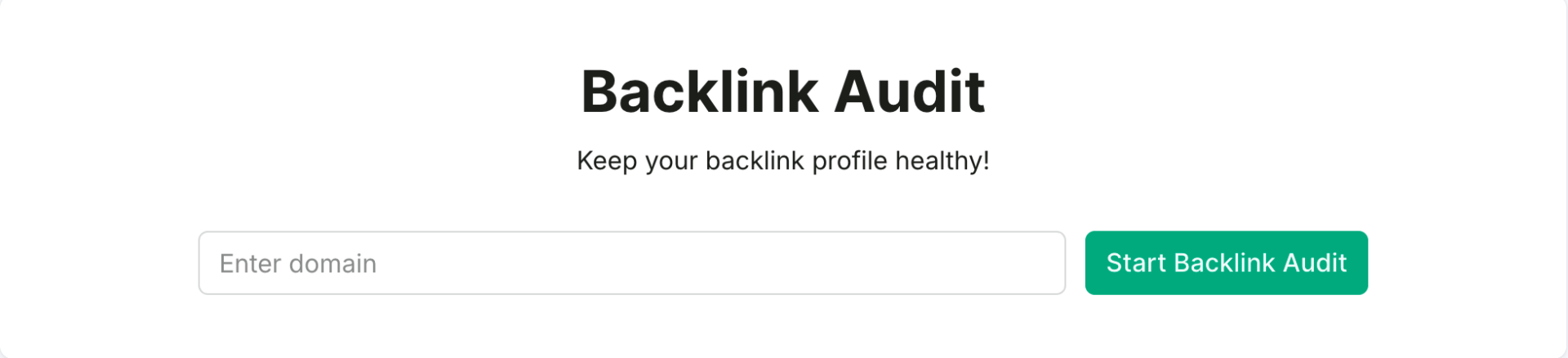
If your case studies are valuable, they can also attract backlinks from industry websites. Monitoring these links with Semrush Backlink Audit can help you understand how your content contributes to your site’s authority.
A prospect who reads a detailed case study is 5x more likely to become a customer than one who just reads your homepage.
Strategy 11: Host Webinars and Live Sessions
Webinars are underutilized in Nigeria. They work because they establish authority, allow real-time interaction, and produce warm leads.
Choose a topic that solves a real problem your customer faces. Promote it on your social media, email list, and WhatsApp groups for two weeks before. Keep it short (30-45 minutes).
Deliver genuine value. Don’t spend the whole time pitching. Teach something useful. Answer questions. At the end, mention that if they want help implementing what you taught, they can book a consultation.
Require registration with an email address. Now you have a list of people interested in your topic. Follow up with all attendees and non-attendees with a recording and offer.
Strategy 12: Network in Communities Where Your Customers Gather
This is often overlooked but works incredibly well in Nigeria. Facebook groups, WhatsApp groups, Reddit communities, and LinkedIn groups are where real conversations happen.
Find groups where your ideal customer hangs out. Introduce yourself. Participate in conversations. Answer questions without expecting anything back.
Over time, people recognize you. When they need what you offer, they remember you and reach out.
Examples:
- If you’re a business coach, join groups for Nigerian entrepreneurs and small business owners
- If you’re a designer, join groups for e-commerce businesses and startups
- If you’re a consultant, join industry-specific groups for logistics, manufacturing, finance, etc.
Don’t spam. Don’t sell. Just be helpful. If you’re genuinely useful, people will ask about your services.
Strategy 13: Optimize Your Google Business Profile and Local Listings
If you serve customers in a specific location (Lagos, Abuja, Port Harcourt, etc.), local search is critical.
Claim and fully complete your Google Business Profile. Add:
- Accurate address and phone number
- Hours of operation
- Photos of your work
- Service areas (the neighborhoods or zones you serve)
- Regular posts and updates
Ask your satisfied customers to leave reviews. Respond to every review, positive or negative. Google prioritizes businesses with recent, authentic reviews.
Also, claim and optimize your profiles on:
- Facebook Business
- Industry-specific directories
- WhatsApp Business profile
This isn’t just for visibility. It’s because many people search locally first. “Digital marketing agency near me” or “accountant in Ikoyi” brings up local businesses. If you’re optimized, you’ll show up.
Strategy 14: Use Email Marketing to Nurture and Convert
Email gets a bad reputation in Nigeria because most businesses do it wrong. They collect email addresses and then never follow up. Or they only email when they want to sell.
Done right, email is one of the highest-ROI channels.
When someone signs up for your lead magnet or becomes a lead, add them to an automated email sequence. The first email should deliver what they signed up for. The next emails (over the next week or two) should:
- Educate them about your service or product
- Answer common objections
- Share social proof or a case study
- Ask for a conversation or consultation
Keep emails short. Most Nigerian professionals read email on their phones. A 200-word email with a clear next step works better than a 1,000-word essay.
Personalize subject lines with the person’s name. Test different sending times and days. Track open rates and click rates.
Platforms like Brevo (formerly Sendinblue) or Mailchimp work in Nigeria and have affordable plans for small businesses.
Strategy 15: Measure and Optimize Everything
This is the strategy that ties all the others together. If you’re not measuring, you’re guessing.
For each lead-generation channel, track:
- How many leads did you generate?
- What is the cost per lead?
- How many converted to customers?
- What is the revenue from those customers?
- What is the ROI?
Example: You spend ₦100,000 on Meta ads in a month and generate 20 leads. Cost per lead is ₦5,000. Four leads become customers. Each customer is worth ₦100,000 in revenue. Your ROI is 4x.
If a channel isn’t producing positive ROI, kill it or fix it. If it’s working, scale it.
Most Nigerian businesses don’t do this. They run campaigns, hope something works, then wonder why their marketing budget disappeared.
Use a spreadsheet or a CRM like HubSpot or Zoho to track this. Check it every week. Make decisions based on data, not intuition.
Which Strategies Should You Use?
The answer depends on your business, your budget, and your ideal customer.
For a B2B service business with a ₦300,000 monthly marketing budget:
- Start with Strategy 1 (define your ideal customer)
- Implement Strategy 5 (WhatsApp + SMS)
- Run Strategy 7 or Strategy 8 (paid ads)
- Layer in Strategy 2 (content) over time
- Add Strategy 9 (referral partnerships)
For a B2C e-commerce or fashion brand:
- Start with Strategy 1
- Build Strategy 6 (social media)
- Run Strategy 7 (Meta ads)
- Add Strategy 11 (webinars or live sessions)
- Layer in Strategy 2 (content)
For a local service business (plumber, electrician, consultant):
- Start with Strategy 1
- Optimize Strategy 13 (Google Business Profile)
- Implement Strategy 5 (WhatsApp)
- Run Strategy 8 (Google Search ads)
- Add Strategy 12 (community networking)
The common thread: start with clarity, pick one or two channels where your customers actually are, test, measure, and optimize before scaling.
The System That Actually Works
Most Nigerian businesses have strategies. What they don’t have is a system.
A real system combines:
- A clear definition of who you’re trying to reach
- Multiple channels bringing traffic (paid ads, content, partnerships, social media, etc.)
- A mechanism to capture contact information (form, lead magnet, landing page)
- Immediate follow-up (WhatsApp, email, phone call)
- Consistent nurturing until they’re ready to buy
- Measurement and optimization
Without a system, you’re just running isolated campaigns. One month, you run an ad. Next month, you post on social. Nothing connects. Nothing builds on itself.
With a system, every piece supports the others. You post on social to build an audience and credibility. That audience clicks your ads because they recognize you. They download your lead magnet. They get added to your email sequence. You follow up on WhatsApp. By the time they’re ready to buy, you’ve touched them five times through five different channels. You’ve built trust.
This works. We’ve built this for clients at Oxgital. When a system is in place, businesses go from wondering where the next customer is coming from to having a predictable, repeatable way to generate qualified leads.
What To Do Now?
If you’re serious about generating leads for your Nigerian business, don’t try to implement all 15 strategies at once. You’ll get overwhelmed. Nothing happens.
Pick three strategies that best fit your business and budget. Test them for one month. Measure the results. Then add one more.
Start here:
- Define your ideal customer with brutal specificity. Write it down. Be harsh about it.
- Pick the channel where your customers actually spend time. Ask them if you’re not sure.
- Create an offer worth their contact information. A lead magnet, a consultation, a discount.
- Set up a follow-up sequence. When someone gives you their contact info, you reach out within hours.
- Measure everything. Track leads, cost, conversions, and revenue.
Do this for 30 days. You’ll have real data about what works and what doesn’t.
Scale what works. Kill what doesn’t. Add new strategies.
This is how sustainable lead generation works in Nigeria. It’s not magic. Its structure, discipline, and measurement. If you’d like help building a lead generation system tailored to your business, our team at Oxgital specializes in exactly this. We’ve helped businesses like Alayo reach 500% ROAS and Cudium process $300M+ in cross-border payments by building systems that actually generate qualified leads. Get in touch, and let’s talk about what’s possible for your business.