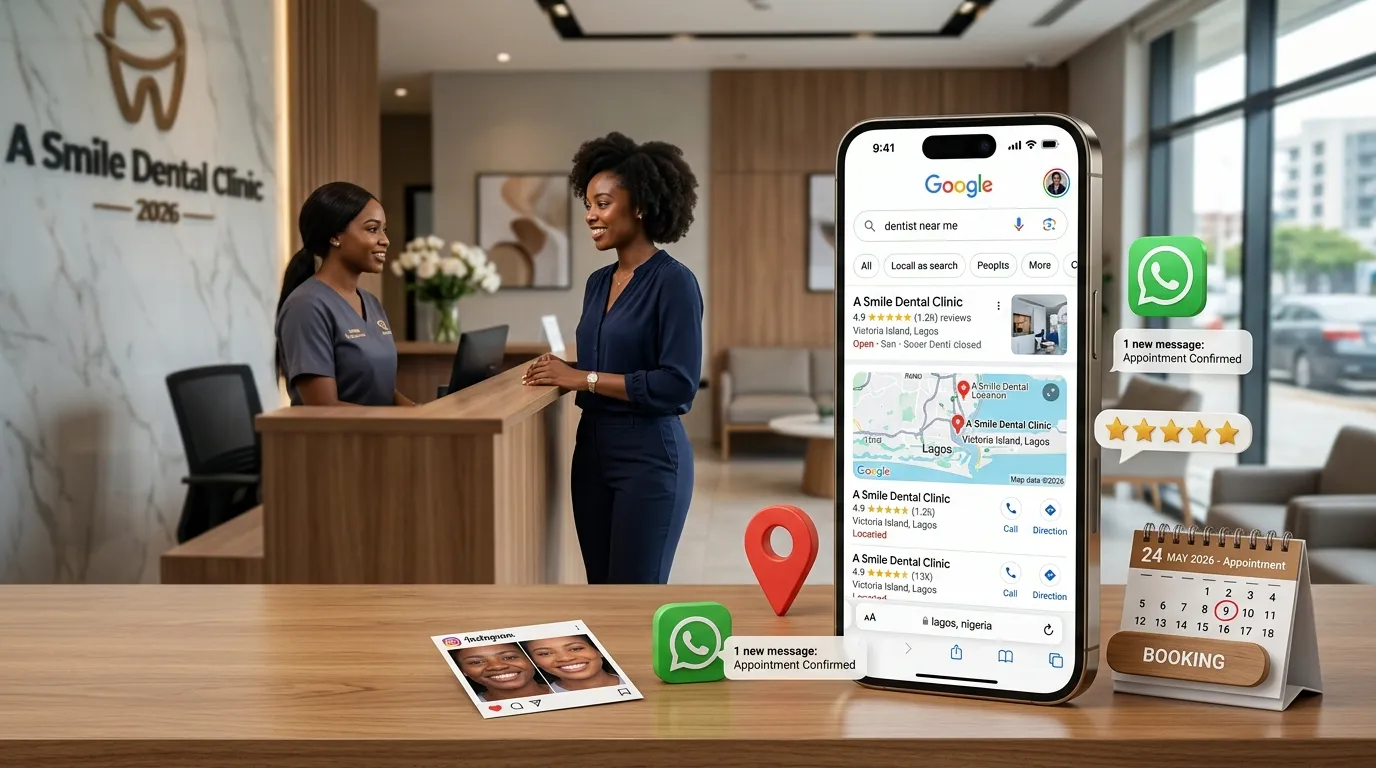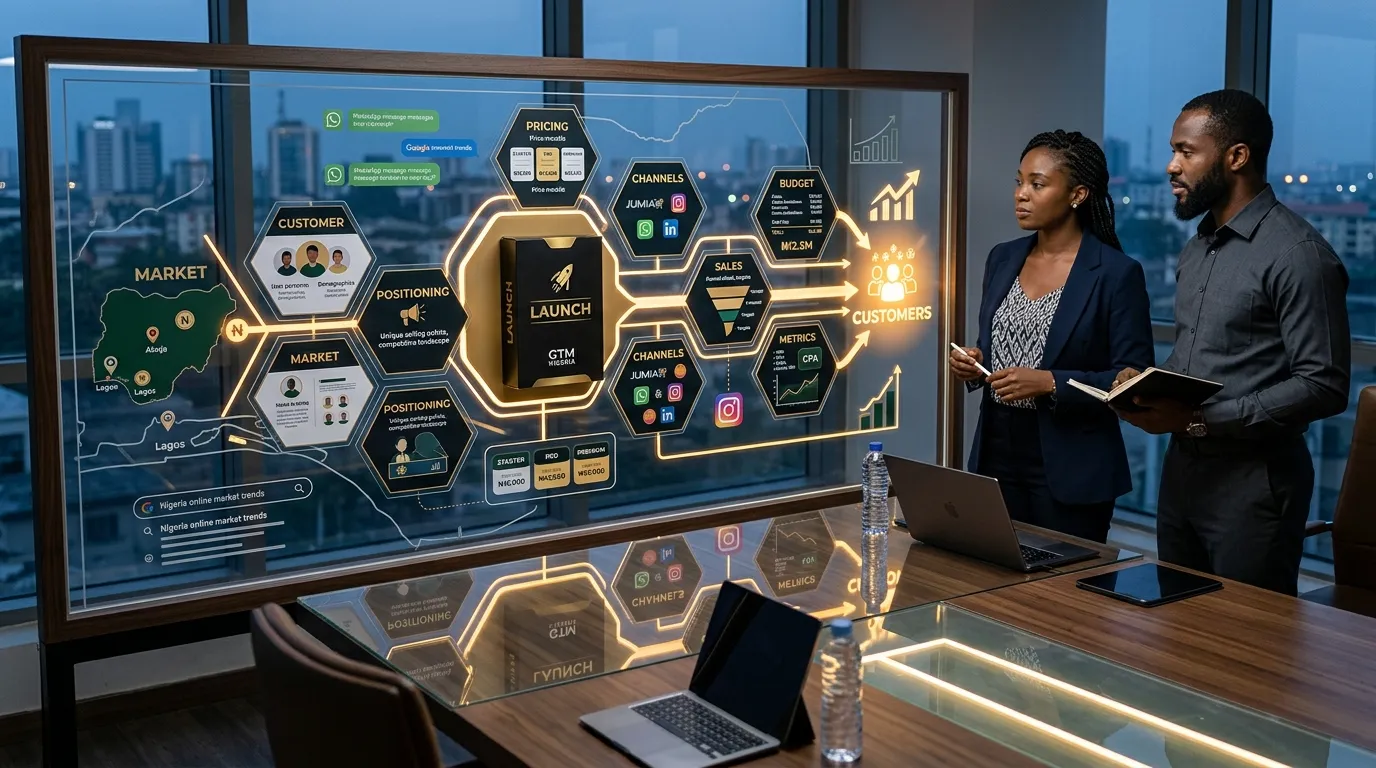
How to Generate Leads for Your Business in Nigeria is one of the biggest challenges facing many business owners today. Most Nigerian founders we speak to are not short of ambition. What they’re short of is a reliable way to fill a pipeline.
They’ve tried posting on Instagram and gotten likes but no inquiries. They’ve run Meta ads and burned through ₦300,000 in three weeks with two leads to show for it. Some have hired an agency, gotten a content calendar and a monthly report, and still had no idea whether any of it was working. The question they keep circling back to is the same one: how do I actually generate leads for my business?
It’s a fair question, and the answer isn’t simple, but it is learnable. Lead generation is the process of attracting people who have a reason to be interested in what you sell, capturing their contact information, and moving them toward a buying decision. Done correctly, it replaces the anxiety of “where is my next client coming from?” with a predictable, repeatable system. Done incorrectly, it wastes money and time on activity that looks productive but produces nothing.
This article covers what lead generation actually means in the Nigerian market, the most effective channels and strategies available to you right now, and how to structure a lead generation system that converts strangers into paying customers. By the time you finish reading, you’ll have a practical framework you can apply to your specific business, whether you’re running a fashion brand in Lagos, a professional services firm in Abuja, or an energy startup in Port Harcourt.
What Is Lead Generation, and Why Does It Matter for Nigerian Businesses?
A lead is any person who has shown some form of genuine interest in your product or service. Not just someone who scrolled past your ad. Not a follower who liked a post. A lead is someone who raised their hand, someone who submitted a form, sent a DM asking about pricing, clicked a link to your WhatsApp, booked a consultation, or downloaded something you offered in exchange for their contact information.
Lead generation is the system you build to make that hand-raising happen at scale, consistently, across the right audience.
For Nigerian SMEs, this matters for a specific reason. The trust deficit between Nigerian consumers and local businesses is real. People don’t just hand over their money on a first impression. They research. They ask around. They check your Instagram page, read a few comments, look at your Google Business reviews, and sometimes ask a friend before they buy. Your lead generation system is the bridge between someone who doesn’t know you yet and someone who trusts you enough to start a conversation.
According to DataReportal’s Digital 2025 Nigeria report, there were 107 million internet users in Nigeria at the start of 2025, representing 45.4% of the population. That audience is already online. They’re already searching for products and services. The question is whether they’re finding you, or finding your competitor.
The Lead Generation Process: How It Actually Works

Understanding the mechanism behind lead generation is what separates businesses that have a system from businesses that are guessing. The process runs through five stages. Miss one and the whole thing stalls.
Attract the Right Audience
You can’t generate leads from people who have no reason to care about what you offer. Attraction is about reaching the right people, not just a lot of people. A roofing contractor in Abuja needs to be found by homeowners in Abuja who need roofing work, not by furniture buyers in Port Harcourt. The channels you use to attract your audience depend on your business type, your budget, and where your target customers actually spend time.
For most Nigerian B2C businesses, Instagram, TikTok, and Facebook are where the audience lives. For professional services and B2B companies, Google Search, LinkedIn, and even WhatsApp broadcasts work harder. Most founders choose channels based on what they personally use. Their buyers are somewhere else entirely.
Capture Their Information
Attraction without capture is marketing for brand awareness, not for leads. You need a mechanism that converts interest into a contact detail you can follow up on. This might be a landing page with a form, a WhatsApp Business link, a lead form on a Facebook or Instagram ad, or a Calendly booking link. The key is that the person gives you something in exchange for something valuable, whether that’s a free consultation, a price list, a sample, or a useful resource.
This is where many Nigerian businesses drop the ball. Their Instagram bio says “DM for orders” and that’s the entire capture mechanism. One person has to manually manage every DM, nothing is tracked, and prospects who don’t get a response within a few hours move on. A proper capture mechanism is automated enough to work even when you’re not online.
Qualify What Comes In
Not every lead is worth pursuing with the same energy. A qualified lead matches your ideal customer profile and has a genuine intent to buy. Someone who fills out your contact form with a real enquiry is a different conversation from someone who clicked a free giveaway ad with no purchase intent.
Qualification can happen automatically through the questions on your form (budget, timeline, company size, specific need) or manually through a quick WhatsApp conversation before you invest hours in a full proposal. Either way, building qualification into your process saves your team from spending time on leads who were never going to convert.
Nurture Until They’re Ready
The majority of leads who come in are not ready to buy immediately. Some need a week. Some need three months. Some need to see you show up consistently before they trust you enough to pay. Nurturing is the process of staying present, relevant, and useful during that decision window.
In Nigeria, this means WhatsApp broadcasts with genuinely useful content, email that does not just sell, retargeting ads that follow a prospect after they visited your website, and Instagram Stories that document real client results. The goal is to stay present long enough that when the person is ready to move, you’re the obvious call. The businesses that consistently close leads are the ones that stay in the conversation.
Convert to Customers
Conversion is the point where a lead becomes a paying client. This usually requires a clear, friction-free next step, whether that’s a quote, a discovery call, a demo, or a simple payment link. The longer and more complicated your conversion path, the more leads you’ll lose. In a market where people are used to fast, mobile-first transactions through Paystack and Flutterwave, a clunky checkout experience or a delayed response time loses you customers who were already sold.
The 8 Most Effective Lead Generation Strategies for Nigerian Businesses
There’s no single strategy that works for every business. What works for a real estate developer in Ikoyi is different from what works for an HR software startup in Victoria Island or a fashion brand selling online across Nigeria. That said, the following eight strategies cover the full range of approaches available to you, across different budgets and business types.
1. Search Engine Optimisation (SEO)
SEO is the process of building your website and content so that Google surfaces you when your target customers search for what you offer. It’s one of the most sustainable lead generation channels available because the traffic it generates is free, high-intent, and compounds over time.
A potential client searching “solar installation Lagos” or “real estate lawyer Abuja” is actively looking for a solution. If your website ranks at the top of those results, you’re capturing demand that already exists, not creating it from scratch. That’s a fundamentally different cost structure from paid ads.
The tradeoff is time. SEO takes months, not weeks, to produce results. But once it works, it keeps working without ongoing ad spend. Oxbillboards, one of our clients, now dominates billboard advertising search in Nigeria largely because of a deliberate SEO strategy we built for them. Our work included online presence optimisation that went beyond just rankings, covering reputation management, content strategy, and local search visibility as a connected system.
For Nigerian SMEs, the most accessible SEO gains come from three areas: optimising your Google Business Profile for local search, building content around the specific questions your customers type into Google, and earning backlinks by being genuinely useful and cited online.
2. Paid Advertising (Google, Meta, TikTok)
Paid ads are the fastest way to generate leads if you have budget to invest. Google Search ads capture demand that already exists; Meta and TikTok ads create demand by interrupting the right person with a relevant offer.
The distinction matters. If someone is actively searching “how much does it cost to build a house in Lagos,” a Google Search ad is perfectly positioned to intercept that intent. If you’re selling a fashion product that people don’t know to search for, a visually compelling Instagram or TikTok ad can stop the scroll and build awareness that eventually converts.
According to HubSpot’s 2025 State of Marketing Report, website/blog/SEO (23.21%), social media shopping tools (22.74%), and email marketing (22.35%) are among the top-performing channels for conversion ROI. Paid social came in at 21.39%. The differences are marginal at that level, which tells you something important: no single channel dominates, and the best results come from the channels that fit your specific audience and offer.
For Nigerian SMEs, one of the biggest mistakes we see is running ads without a proper landing page. Traffic goes to a homepage that doesn’t convert, or to an Instagram profile with no direct call to action. Before you increase your ad budget, fix the conversion point. Spend ₦50,000 on improving the page people land on before you spend another ₦500,000 driving traffic to it.
3. Content Marketing and Blogging
Content marketing generates leads by solving problems your target audience already has. When you publish the right content consistently, you attract people at the exact moment they’re searching for what you know, and you build the kind of credibility that makes the eventual sales conversation much easier.
For a logistics company in Lagos, that might mean an article on “how to ship goods from Lagos to Accra without customs delays.” For a financial advisory firm, it might be a guide on “how Nigerian SMEs can structure for tax efficiency.” In both cases, the person reading is already interested in the subject. You’re meeting them there.
The challenge for most Nigerian businesses is consistency and quality. Thin, generic blog posts that cover the same topics as every other website don’t rank and don’t build authority. What works is depth, specificity, and real expertise. Write about what you actually know. Use specific examples from the Nigerian market. Answer the questions your clients actually ask you.
4. WhatsApp Marketing and Lead Nurturing

WhatsApp is the most underrated lead generation and nurturing channel for Nigerian businesses. It’s where most of your potential customers spend time every day; it has near-100% open rates compared to email’s 20-30%, and it enables the kind of direct, personal conversation that accelerates trust.
For lead generation specifically, WhatsApp Business works in two ways. First, it captures leads from people who click a WhatsApp link on your website, Instagram bio, or ad. Second, it nurtures leads through broadcast messages and status updates that keep your business visible without being intrusive.
The key is using it intentionally, not just reactively. Don’t wait for people to DM you and then respond manually. Build a broadcast list of engaged prospects. Send genuinely useful content on a regular schedule. Keep it conversational and specific. A WhatsApp broadcast from a property developer that says “3 things to check before buying land in Lekki Phase 2” will outperform a broadcast that just says “we have properties, call us” every time.
5. Social Media Marketing
Social media is where Nigerian consumers discover businesses. Instagram and TikTok drive the most organic discovery for consumer brands. Facebook still carries significant reach for users aged 35 and above and remains a strong channel for paid advertising. LinkedIn is growing in value for professional services, B2B, and corporate communication.
But social media alone is not a lead generation system. It’s a visibility channel. The mistake is treating likes, followers, and reach as lead generation metrics. They’re not. A brand with 50,000 Instagram followers and no structured way to capture enquiries, follow up on DMs, or move interested prospects toward a decision is not generating leads. It’s generating attention without a system to convert that attention.
The brands we’ve seen consistently generate leads through social media share a few things in common. They have a clear, obvious next step in every piece of content (a link, a DM prompt, a booking call). They respond to DMs fast. And they use their social media management as one connected piece of a larger funnel, not as a standalone activity.
6. Email Marketing
Email marketing has one of the highest ROIs of any digital marketing channel, and it remains underused by Nigerian businesses, most of whom treat email as an afterthought compared to WhatsApp and Instagram.
The basics are straightforward: you build a list of people who have opted in, you send useful content on a regular schedule, and you periodically make offers to that list. The power is in the list. A business with 5,000 engaged email subscribers can launch a new product or service and generate immediate revenue from people who already trust them. That’s not something you can do with an Instagram following of the same size, because your posts only reach a fraction of your followers.
To build an email list, you need a lead magnet: something valuable enough that people will give you their email address in exchange for it. This might be a free consultation, a pricing guide, a useful checklist, or an ebook. The specificity matters. A real estate company in Abuja that offers “a free guide to the 7 mistakes Nigerians make when buying their first property” will collect better leads with higher intent than one that offers “subscribe to our newsletter.”
7. Lead Magnets and Offers
A lead magnet is any piece of value you offer in exchange for a prospect’s contact information. It’s the foundation of most structured lead generation campaigns. The goal is to create something specific enough to attract the right person and valuable enough that they’re willing to give you a way to follow up.
Effective lead magnets in the Nigerian market tend to be either time-saving (a template, a checklist, a calculator), cost-transparent (a pricing guide or budget breakdown), or exclusive (early access, a discount, a free assessment). Vague offers like “get our free ebook” don’t work anymore. “Get a free 30-minute brand audit call and leave with 3 specific things to fix on your website” will convert at a higher rate because the outcome is concrete and the value is immediately clear.
“One of the best ways we generate leads for our business is with lead magnets. In our case, we offer visitors a discount on a product or an ebook on a specific topic they’ve shown interest in. We often introduce this via a non-invasive popup. Once someone signs up, we send them a very short questionnaire so we can personalise all future emails. This has worked really well for us over the last 6 years.”
— A user in this subreddit on r/DigitalMarketing
Six years of sustained results from one mechanic is not an accident. It’s a system. The personalisation piece is especially important: when you segment your list based on the questionnaire responses and send people content that matches their actual interest, your conversion rates go up materially.
8. Referrals and Partnerships
Referrals are the highest-quality leads most businesses ever receive because they come with pre-built trust. A client who heard about you from someone they respect walks into the conversation already partially sold. In Nigeria’s relationship-driven business culture, referrals are not just a nice-to-have. For many professional services firms, real estate companies, and B2B businesses, referrals are the primary source of new clients.
The problem is that most businesses leave referrals entirely to chance. They do good work, hope clients talk about it, and occasionally get a call. A referral system makes this intentional: you ask satisfied clients directly for introductions, you offer a structured incentive for referrals where appropriate, and you make it easy for people to refer you by giving them something specific to say.
Strategic partnerships work on a similar principle. A web development agency that partners with a branding studio gets referred clients who already need a website. A solar energy company that partners with a construction firm reaches homeowners at exactly the moment they’re ready to buy. We built Tursan Energy’s digital presence from the ground up, but their referral pipeline from construction partnerships we helped them identify became one of their most consistent lead sources within the first year.
How to Qualify Leads: Separating Serious Buyers from Time-Wasters

One of the most common complaints we hear from Nigerian business owners is that they get plenty of inquiries, but most of them don’t convert. “People just dey price” is how one Lagos founder described it. The issue is usually not the number of leads. It’s the quality. And quality is a function of how well you’ve qualified your prospects before investing time in them.
Lead qualification is the process of assessing whether a given lead has the intent, budget, and authority to actually become a customer. The most practical framework for this is BANT: Budget, Authority, Need, and Timeline.
| Qualification Factor | What You’re Assessing | How to Check |
| Budget | Can they afford your service? | Ask directly, or structure tiers in your enquiry form |
| Authority | Are they the decision-maker? | Ask “are you the person who makes this decision?” |
| Need | Are they the decision-maker? | Listen carefully; don’t assume |
| Timeline | Are they ready to move now or in six months? | Ask “when are you looking to start?” |
In practice, you build qualification into your enquiry process. Your contact form includes a field for budget range. Your WhatsApp auto-reply asks a qualifying question before you respond in full. Your discovery call starts with understanding timeline and decision-making structure before you pitch anything.
This protects your time and, done with some grace, actually improves the client experience. People who are serious about solving a problem appreciate a structured approach. The ones who disappear at the first qualifying question were never going to convert anyway.
Lead Generation Best Practices That Work in the Nigerian Market
Some principles apply universally regardless of which channel or strategy you choose. These separate businesses that get a trickle of leads from businesses that have a pipeline.
Define Your Ideal Customer Before You Start
This sounds obvious, but most Nigerian businesses skip it. “Everyone” is not a target audience. The more specifically you define who you’re trying to attract, including industry, business size, location, pain point, and budget range, the more targeted your messaging becomes, and the higher quality leads you attract.
We’ve seen founders waste months and hundreds of thousands of naira on Meta ads that were speaking to the wrong person. Tightening the audience from “Nigerian businesses” to “Lagos-based fashion retailers with an existing Instagram page and less than 10 employees” changed the economics entirely for one brand we worked with.
Speed of Follow-Up Determines Conversion Rate
A lead who contacts you and doesn’t hear back within two hours is already colder. By 24 hours, they may have moved on to a competitor. This is one of the most consistent findings across every business category we’ve worked with at Oxgital: speed to response is a better predictor of conversion than almost any other variable, including price.
Build an automated first-response system for every lead capture channel. On WhatsApp, set up an auto-reply that acknowledges the enquiry and tells the person when to expect a real response. On your website form, trigger an automated email immediately. On Instagram, use quick replies for the most common DM enquiries. The automation doesn’t close the sale, but it holds the lead’s attention until a human can step in.
Your Website Is Your Lead Generation Foundation
No paid ad, no social media post, and no WhatsApp broadcast performs well over the long term if the underlying destination converts poorly. Your website is the hub that everything else points to. If it loads slowly on a mobile connection, if the call to action is unclear, or if a visitor can’t immediately understand what you do and who you help, your lead generation system leaks the source.
For Nigerian businesses building or rebuilding their websites, the priority is clarity, speed, and mobile performance. Most of your visitors are accessing you via a smartphone on a 4G connection. A page that takes 8 seconds to load loses more than half its visitors before they see a single word. Our website and tech solutions are built with this reality in mind: conversion and performance, not just aesthetics.
Track the Numbers That Actually Matter
Activity metrics (number of posts, ad impressions, website visits) tell you you’re doing things. Outcome metrics (cost per lead, lead-to-customer conversion rate, revenue from leads generated) tell you whether those things are working. Most Nigerian businesses track the wrong things, or track nothing at all.
A simple lead tracking system doesn’t need to be expensive. A Google Sheet that captures source, date, status, and outcome for every lead costs nothing and tells you within 60 days which channels are generating your best leads. That data is what you use to decide where to invest more and where to cut.
B2B vs. B2C Lead Generation: Why the Approach Is Different
One of the most useful clarifications from practitioners in the Reddit discussion around this topic was the observation that B2B and B2C lead generation are fundamentally different disciplines. The person asking for advice about their “small business” was getting very different recommendations depending on what type of business they were running, and with good reason.
| Factor | B2B Lead Generation | B2C Lead Generation |
| Decision process | Multiple stakeholders, longer cycle | Usually individual, faster decision |
| Best channels | Google Search, LinkedIn, email, events | Instagram, TikTok, Facebook, WhatsApp |
| Content type | Case studies, ROI calculators, detailed guides | Product demos, reviews, testimonials, lifestyle content |
| Lead volume | Lower volume, higher value per lead | Higher volume, lower value per lead |
| Trust signals | Client logos, case studies, certifications | Social proof, reviews, user-generated content |
| Follow-up approach | Structured sales process, multiple touchpoints | Fast response, mobile-first, promotional offers |
For a B2B company selling HR software to Nigerian companies with 50+ employees, LinkedIn outreach, Google Search ads targeting decision-maker queries, and detailed case studies will outperform Instagram content every time. For a D2C fashion brand selling to Nigerian women aged 22 to 35, Instagram Reels, TikTok content, and WhatsApp follow-ups will drive more conversions than a LinkedIn campaign.
The error most generalist advice makes is assuming one system fits all. Know your buyer. Build for them specifically.
Common Lead Generation Mistakes Nigerian Businesses Make
These are the patterns we see repeatedly across the businesses we work with, and they cost founders real money and time.
Confusing awareness with lead generation. Getting 10,000 views on a TikTok video is not lead generation. It’s visibility. Without a structured path from that visibility to a contact capture mechanism, it doesn’t fill your pipeline.
Running ads without testing the conversion path first. Spending ₦200,000 per month on Facebook ads that send traffic to a poorly designed website with a slow loading time is spending money to prove that your funnel doesn’t work. Fix the funnel first. Then buy the traffic.
Building on borrowed land. An Instagram account is not your asset. Meta can restrict, suppress, or shut it down. Your email list, your WhatsApp contact list, your website traffic from SEO: these are assets you own. The most resilient lead generation systems drive people off social media and into channels you control.
Treating every lead the same. Not every enquiry deserves the same response and the same urgency. Someone asking for a bulk corporate order is a different conversation from someone asking “how much?” with no other context. Build qualification into your process early.
Giving up on a channel before it’s had time to work. SEO takes 3 to 6 months to produce meaningful results. Email lists take time to build. Referral systems take time to activate. Many Nigerian businesses abandon the right strategy because they don’t see results in the first 30 days and pivot to whatever looks new.
How to Build Your Lead Generation System: A Practical Starting Framework

Rather than trying every strategy at once, build a system in layers. Start with what’s achievable in your current situation, prove it works, then expand.
Month 1 to 2: Fix the foundation. Audit your website for mobile speed and conversion clarity. Set up or optimise your Google Business Profile. Install a basic tracking system (Google Analytics at minimum). Make sure every social media profile has a clear link to a capture mechanism.
Month 2 to 4: Activate one primary channel. Choose the single channel most likely to reach your ideal customer with your current budget. If you have ₦100,000 to ₦300,000 per month, start with either Meta ads or Google Search ads. If your budget is tight, start with organic content on one platform and consistent SEO work. Don’t try to run five channels simultaneously with limited resources.
Month 3 to 6: Build the nurture system. Once leads are coming in, build the follow-up process. Automate first responses. Create a WhatsApp broadcast list. Set up a basic email sequence. Build a pipeline tracker even if it’s a spreadsheet.
Month 6 onwards: Add channels based on data. By this point, you have real numbers. You know your cost per lead, your best lead sources, and your conversion rate. Add new channels based on evidence, not speculation. Scale what’s working. Cut what isn’t.
This is the approach we use when we work with Nigerian businesses on their digital marketing strategy. No single-channel thinking. No guessing. A system built for the specific business, audience, and budget in front of us.
What Comes After the Lead: Turning Enquiries Into Revenue
Getting leads is only half the job. The conversion side of your pipeline determines whether your lead generation investment actually pays off. A business that generates 100 leads per month and converts 2% is losing to a business that generates 40 leads per month and converts 15%, every time.
Conversion rate is a function of three things: lead quality (did you attract the right people?), follow-up speed (did you respond before they moved on?), and sales process quality (did you communicate value clearly and make it easy to buy?).
For most Nigerian businesses, the fastest gains in conversion come from response time. Get that down to under two hours, and you’ll see your conversion rate move before you change anything else. After that, focus on the quality of your first conversation. Not a pitch. A discovery. Ask questions. Understand the problem. Then show specifically how you solve it.
We’ve seen businesses with good lead generation systems and broken sales processes leave significant revenue on the table. And we’ve seen businesses with average lead volumes but excellent follow-up processes consistently outperform competitors with bigger marketing budgets. Leads don’t close themselves. The system only works if both halves of it do.
The Right Next Step for Your Business
If you’ve read this far, you already know more about lead generation than most Nigerian business owners. You know how the process works, which channels are available to you, where most businesses go wrong, and how to build a system that actually produces results.
The harder question is which part of this applies to your specific situation right now. That depends on your industry, your current pipeline, your budget, and what’s already in place. You might need to fix your website before you spend another naira on ads. You might have a strong social presence but no capture mechanism. You might be generating enquiries but losing them at the follow-up stage.
That diagnosis is what we do at Oxgital. If you’re serious about building a lead generation system that works specifically for your business, get in touch with our team, and we’ll start with an honest assessment of where your biggest gap is. No vague strategy documents. Just a clear view of where you are, where you need to be, and how to close the distance.