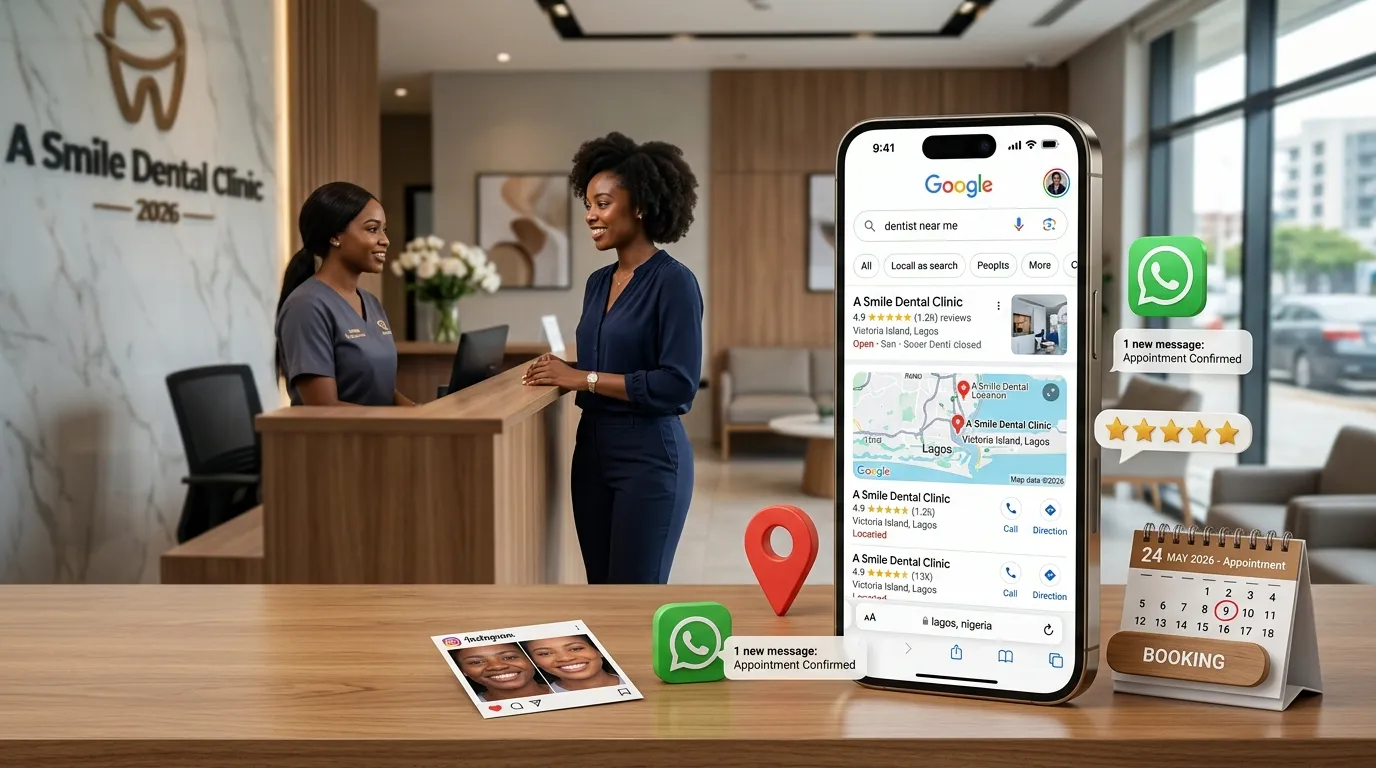
Running marketing manually in 2026 is like filling a swimming pool with a bucket. You can do it, but the brands that automated their follow-up sequences are lapping you while you’re still typing individual WhatsApp messages and scheduling Instagram posts one at a time.
Fortune Business Insights values the global marketing automation software market at $8.14 billion in 2026, growing to $20.12 billion by 2034. That growth isn’t only large corporations. Nigerian SMEs are buying these tools because the payback is documented: Nucleus Research reviewed 16 deployments and found an average return of $5.44 for every dollar spent over three years, with payback inside six months. That analysis is from March 2021 and covers mostly Western companies, so treat it as direction rather than a promise.
The Nigerian case is sharper for a different reason: your customers are scattered. DataReportal counted 109 million internet users in Nigeria at the end of 2025, with TikTok’s adult ad audience at 47.8 million, Facebook at 38 million and YouTube at 30.5 million. The same buyer sends you a WhatsApp message, opens an email three days later, and researches you on Google before paying. Following each one manually doesn’t scale past about thirty leads a week.
This article covers the 10 best marketing automation software platforms available to Nigerian businesses right now, with pricing verified in September 2026 and converted at ₦1,400 to the dollar, which is closer to what a Nigerian card settles at than the official rate.
What is marketing automation software?
Marketing automation software replaces repetitive marketing tasks with workflows that run on triggers: a customer action, a time delay, or a condition you set.
In practice that means a welcome email that fires when someone submits your form, a WhatsApp follow-up 48 hours after an enquiry, a lead score that rises each time a prospect opens an email, or a six-week nurture sequence that runs without anyone touching it.
The best platform is the one your team will actually use, that connects to the tools you already have, and that stays affordable as your list grows. A feature-rich system nobody logs into is worse than a simple one that runs.
What should you check before choosing a platform?
Three things decide whether a tool becomes an asset or a monthly regret.
How the pricing scales. Most of these platforms charge by contact count, and the curve is steep. ActiveCampaign’s Starter plan is $19 a month at 1,000 contacts and $189 a month at 10,000. Klaviyo runs $30 at 1,000 profiles and $150 at 10,000. Model your cost at three to five times your current list before you commit, and remember the bill moves with the naira as well as with your list.
Whether your team can run it. A platform that needs two weeks of training and a dedicated ops person is a liability for most Nigerian SMEs. A marketer with intermediate skills should be able to build and launch a sequence in an afternoon.
What it connects to. If your CRM is a Google Sheet and your store runs on Shopify, the tool has to talk to both. Anything that can’t reach your payment gateway, your website or your contact list creates work instead of removing it.
On features, the questions worth asking are narrow: can the sequence branch based on whether someone opened or clicked, can you score leads by behaviour and route the hot ones to a salesperson, does it reach WhatsApp and SMS as well as email, and can you see which sequence produced revenue without building a custom dashboard.
The 10 best marketing automation software platforms in 2026
1. ActiveCampaign
Best for: growing businesses that need automation depth without enterprise pricing.
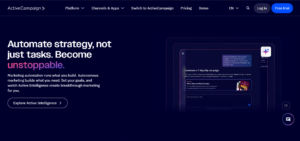
ActiveCampaign is the platform we recommend most often to Nigerian businesses that have outgrown basic email tools. Its visual automation canvas is still the best-designed in this price class, and it branches on almost anything: opens, clicks, site visits, form submissions, custom events, or the absence of an action after a set period.
Pricing starts at $19 a month for 1,000 contacts on Starter, about ₦27,000, and climbs to roughly $189 a month at 10,000 contacts on the same plan. Plus is $59 a month at 1,000 contacts and adds contact scoring and SMS. One change matters for budgeting: the CRM and sales engagement tools are now a paid add-on on every tier rather than something included in the marketing plan, so price the CRM separately if you need it.
Reporting is where it still trails HubSpot. If you need multi-touch attribution across a six-month sales cycle, you’ll find it thin.
Is ActiveCampaign right for your business? Yes if you have 1,000 or more contacts, run segmented campaigns, and need multi-step workflows with lead scoring. If you’ve been on Mailchimp for over a year and keep hitting walls, this is the upgrade. Skip it if you only send newsletters.
2. Brevo
Best for: teams with large contact lists, modest send volumes, and WhatsApp at the centre of customer communication.
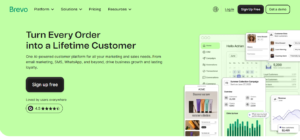
Brevo (formerly Sendinblue) bills by emails sent rather than contacts stored, which is unusual and often decisive for Nigerian businesses sitting on a database of 40,000 names they mail twice a month. Contacts are unlimited on every paid plan.
The free plan sends 300 emails a day with unlimited contacts. Starter begins at $9 a month from 5,000 emails and removes the daily cap. Automation sits on the Standard tier, from $18 a month, which is the plan to budget for if sequences are the point. Brevo also runs SMS and WhatsApp campaigns through the WhatsApp Business API from the same account, which no other mainstream platform here does as cleanly.
Deliverability is a strength. Brevo grew out of transactional email, where inbox placement is the whole business.
Is Brevo right for your business? Yes if your list is large relative to how often you mail it, or if WhatsApp is your main customer channel. Budget for Standard, not Starter, since automation is gated above the entry tier.
3. HubSpot Marketing Hub
Best for: B2B companies with long sales cycles and the deal sizes to fund it.
HubSpot puts CRM, email, website, landing pages, social and ads in one system, so when a prospect converts six months after reading a blog post, you can trace it back. For law firms, consultancies and B2B services in Lagos and Abuja where deals take months, that visibility is real.
The cost is the problem. Marketing automation lives on the Professional plan, now $890 a month billed monthly or $800 on annual billing, with three seats and 2,000 marketing contacts, plus a mandatory one-time onboarding fee of $3,000. At ₦1,400 to the dollar that’s about ₦1.25 million a month and ₦4.2 million to get started, before you add contacts above the 2,000 included.
HubSpot’s free CRM is worth using either way. It costs nothing, tracks contacts and pipelines, and builds the data foundation any automation platform will eventually need.
Is HubSpot right for your business? Only if your average deal exceeds ₦5 million and you close several a month. For everyone else, the free CRM paired with a cheaper automation tool does the same job for a fraction of the money.
4. Mailchimp
Best for: businesses sending their first newsletters and basic welcome sequences.
Mailchimp is where most Nigerian small business owners start, and the interface earns that. A founder with no marketing background can build a welcome series in an hour.
Two things have changed for the worse. The free plan is now 250 contacts and 500 emails a month, down from 2,000 contacts a few years ago, so it functions as a demo rather than a starting point. And you’re billed for every contact on your list, including unsubscribed ones, unless you archive them yourself. Essentials starts at $13 a month for 500 contacts, Standard at $20, and Standard at 10,000 contacts runs about $100 a month, similar to ActiveCampaign but with noticeably less automation depth.
Is Mailchimp right for your business? Fine for newsletters and simple welcome flows. Once you pass 5,000 contacts or need branching logic, you’ll be migrating, so starting on Brevo or ActiveCampaign saves you that move.
5. Klaviyo
Best for: e-commerce brands on Shopify or WooCommerce.
Klaviyo is built for stores, and in that category nothing else comes close. It pulls purchase history, browsing behaviour and product catalogue data in real time, which is what makes its abandoned cart, post-purchase and back-in-stock flows work as well as they do.
Pricing runs $20 a month at 500 profiles, $30 at 1,000, $150 at 10,000 (roughly ₦210,000) and $400 at 25,000. Since February 2025 Klaviyo bills on active profiles, meaning every contactable profile counts toward your tier, not only the ones you email. For a store collecting emails through pop-ups and checkout, that meter climbs on its own, so list hygiene becomes a billing decision.
Is Klaviyo right for your business? Yes for any Nigerian store doing over ₦2 million a month on Shopify or WooCommerce. If you sell physical products and aren’t running automated cart recovery, that’s the first money on the table. Not suitable for service or B2B businesses.
6. Omnisend
Best for: e-commerce brands that want email, SMS and push in one workflow at a lower price than Klaviyo.
Omnisend’s advantage is a single canvas that handles multiple channels: send an email, wait 24 hours, send an SMS if it goes unopened, push a web notification if neither converts. Managing that across separate tools is where most small teams give up.
The free plan covers 250 contacts and 500 emails a month with full automation included, which makes it a genuine zero-risk start. Standard begins at $16 a month for 500 contacts and lands around $132 at 10,000, cheaper than Klaviyo at the same size. Pro starts at $59 and bundles SMS credits.
Is Omnisend right for your business? Yes for stores that want most of Klaviyo’s function at a lower price, and for anyone who wants email and SMS in one editor. Klaviyo still wins on depth of store data.
7. GetResponse
Best for: coaches, trainers and consultants who run webinars.
GetResponse bundles automation, landing pages, webinar hosting and a light CRM, which is hard to find at this price. For Nigerian education and training businesses using webinars to generate leads, that combination is the reason to look.
Check the plan names before you buy, because they moved. Starter is $19 a month for 1,000 contacts with one automation workflow and $79 at 10,000. Marketer, at $59 for 1,000 contacts and about $114 at 10,000, unlocks unlimited workflows and scoring. Webinars now sit on the Creator plan at $69. The automation builder is less sophisticated than ActiveCampaign’s and easier to configure, which is a fair trade for most teams.
Is GetResponse right for your business? Yes if webinars are part of how you sell. Otherwise ActiveCampaign or Brevo give you more automation for the money.
8. MailerLite
Best for: solo founders and creators who want clean automation cheaply.
MailerLite is the simplest tool here and still does real work: visual automation, conditional branching on email activity, landing pages, and an editor that doesn’t fight you.
The free plan now covers 500 subscribers and 12,000 emails a month, halved from 1,000 subscribers in September 2025. Growing Business is $10 a month at 500 subscribers, $15 at 1,000, and $73 at 10,000, around ₦102,000.
What it doesn’t have is depth. Complex multi-path logic, proper lead scoring and CRM integration mean moving to another platform.
Is MailerLite right for your business? Yes for a founder in Lekki testing a first nurture sequence without spending anything. Build the habit here and move up when branching logic starts to matter.
9. Zoho Marketing Automation (Zoho MarketingHub)
Best for: businesses already running Zoho CRM.
If your sales pipeline lives in Zoho CRM, Zoho’s automation product syncs with it natively, no Zapier in the middle. You get multi-channel campaigns across email, SMS and WhatsApp, lead scoring that writes straight back to the CRM, behavioural triggers, and reporting that connects to Zoho Analytics.
Standard is $19 a month for 1,000 contacts, Professional $29 and Enterprise $59. Zoho also bundles its apps under Zoho One at a per-user price, which is worth pricing if you’re standardising your whole stack on one vendor.
Is Zoho right for your business? Yes if you’re already in the Zoho ecosystem. As a standalone choice it’s competent rather than compelling.
10. Zapier with Email Tool Integrations (Workflow Automation for Tight Budgets)
Best for: lean stacks that need existing tools to talk to each other.
Zapier isn’t marketing automation in the strict sense. It’s a connector: an event in one app triggers actions in others, across thousands of integrations.
For a Nigerian founder running a light stack, that covers a lot. A new Typeform submission adds the lead to an ActiveCampaign sequence, creates a deal in your CRM, and notifies the team on Slack. Each of those tools still has to exist. Zapier links them, it doesn’t replace them.
The free plan allows 100 tasks a month on two-step Zaps. Professional starts at $29.99 a month billed monthly, or about $19.99 on annual billing, for 750 tasks. Watch the task maths: a four-step workflow running on 30 leads a day burns 3,600 tasks a month, which is a much bigger plan than the entry tier.
Is Zapier right for your business? Use it alongside an email automation platform, not instead of one. Zapier handles the handoffs between your tools; ActiveCampaign, Brevo or Mailchimp handle the sequences.
Comparing the Best Marketing Automation Software Prices
Here’s a straightforward comparison at three list sizes to help you evaluate cost against your growth stage:
| Platform | Entry price | At 10,000 contacts | Best for |
| ActiveCampaign | $19 (1,000 contacts) | ~$189 (Starter) | Growing SMEs, full automation |
| Brevo | $9 Starter, $18 Standard (5,000 emails) | Priced by sends, not contacts | Large lists, WhatsApp plus email |
| HubSpot | $890/mo Pro, 2,000 contacts, plus $3,000 onboarding | ~$1,025+ | B2B, revenue attribution |
| Mailchimp | $13 Essentials, $20 Standard (500 contacts) | ~$100 (Standard) | Beginners, simple sequences |
| Klaviyo | $20 (500 profiles) | $150 | E-commerce (Shopify/WooCommerce) |
| Omnisend | $16 (500 contacts) | ~$132 | E-commerce, email plus SMS |
| GetResponse | $19 Starter, $59 Marketer (1,000 contacts) | $79 Starter, ~$114 Marketer | Training, webinars, landing pages |
| MailerLite | $10 (500 subscribers) | $73 | Solo founders, creators |
| Zoho MarketingHub | $19 (1,000 contacts) | Rises by contact tier | Zoho CRM users |
| Zapier | $29.99 (750 tasks) | Priced by tasks, not contacts | Connecting a lean stack |
Prices in USD, verified September 2026. The dollar traded at about ₦1,329 at the official NFEM window and around ₦1,400 in the parallel market in early September 2026, so build a buffer into any annual software budget you plan in naira.
Which platform fits your business?
The right platform matches your stage, not the longest feature list.
Under 1,000 contacts and just starting: use MailerLite’s free plan or Brevo’s free tier. Grow the list and learn what your audience responds to before paying for depth you can’t use yet.
A growing SME with 2,000 to 20,000 contacts that needs lead scoring and CRM integration: ActiveCampaign, with the CRM add-on priced in. Choose Brevo instead if WhatsApp is where your customers actually reply.
A store on Shopify or WooCommerce: start on Omnisend’s free plan for cart recovery and post-purchase flows, and move to Klaviyo when monthly revenue passes ₦5 million and you need deeper segmentation.
A B2B professional services firm in Lagos or Abuja: HubSpot’s free CRM plus ActiveCampaign costs a fraction of Marketing Hub Professional and covers most of the same ground, unless your deal sizes clear the ₦5 million bar.
Already on Zoho CRM: stay in Zoho. Native sync with your existing pipeline data beats a marginal feature advantage elsewhere.
We’ve built automation systems across solar energy, fintech, fashion and professional services, connecting CRM, email sequences and ad campaigns into one pipeline. The Àlàyò campaign hit 500% ROAS on repeat-purchase flows, and the Cudium work supported more than $100 million in cross-border payments. In both cases, the software choice took an afternoon. Designing sequences that matched how the customer actually buys took months. That’s the part worth your attention, and it’s what our digital marketing, AI and automation work is built around.
How do you start with marketing automation in Nigeria?
Build the welcome series for new leads first. It runs when someone submits your website form, sends a DM enquiry, or fills a lead form from your Meta ad, and it’s the sequence with the fastest payback.
A workable five-step version:
- Immediately: confirmation email or WhatsApp message acknowledging the enquiry and saying what happens next.
- Day 2: answer the objection your leads raise most often, without pitching.
- Day 5: proof. A testimonial, a case study, or a documented result from a client in the same sector.
- Day 8: a soft ask. Book a call, request a proposal, or view a specific product page.
- Day 14: one more touch for anyone who hasn’t engaged, from a different angle.
That covers the first two weeks of your sales process automatically. It doesn’t replace a phone call for a high-value lead, and it shouldn’t. What it does is stop leads going cold while your team is busy with something else.
Track two numbers from the start: how many leads enter the sequence, and how many book or buy. If you can’t answer both after a month, the sequence isn’t finished.
Frequently asked questions
What is the best marketing automation platform for small Nigerian businesses?
Brevo and MailerLite give the best combination of function and cost. Brevo’s free plan carries unlimited contacts with 300 emails a day and adds WhatsApp Business API campaigns, though automation requires the $18 Standard tier. Once your list passes 5,000 contacts and your logic gets complex, ActiveCampaign is the upgrade.
Do marketing automation platforms work with WhatsApp in Nigeria?
Brevo has the most direct WhatsApp Business API integration among the mainstream platforms, and Zoho supports WhatsApp in its multi-channel campaigns. ActiveCampaign and HubSpot connect through third-party integrations, with more setup involved. If WhatsApp is your primary channel, a dedicated WhatsApp Business API provider such as AiSensy or Interakt is worth pricing alongside your email tool.
How much does marketing automation software cost for a Nigerian startup?
Several platforms have usable free tiers: MailerLite (500 subscribers, 12,000 emails a month), Brevo (300 emails a day, unlimited contacts), and Omnisend (250 contacts with full automation). Paid entry plans run roughly $10 to $30 a month, about ₦14,000 to ₦42,000 at ₦1,400 to the dollar. Budget for the naira moving against you when planning a year.
Can marketing automation replace a marketing team?
No. Automation executes sequences you designed. It doesn’t do strategy, write content, plan campaigns, or work out why conversions dropped last month. If the strategy is wrong, automation produces wrong results faster and at greater volume.
What’s the difference between email marketing tools and marketing automation platforms?
Email tools send emails. Automation platforms trigger actions from customer behaviour, score leads by engagement, run sequences across email, SMS and WhatsApp, and sync contact data with a CRM. Mailchimp and MailerLite sit between the two, offering light automation without the depth of ActiveCampaign, HubSpot or Klaviyo.
Where to go from here
For most Nigerian businesses, the shortlist is four names. ActiveCampaign for growing SMEs that need real automation depth. Brevo for teams that want WhatsApp and email in one place on a controlled budget. Klaviyo or Omnisend for stores where revenue depends on cart recovery and repeat purchase. HubSpot for established B2B companies whose deal sizes justify it.
The subscription is the easy decision. The sequences you build inside it, the segments you define, and the message in each step decide whether the money comes back. If you’d like help choosing a platform or designing sequences that convert Nigerian leads rather than just sending them email, tell us what you’re working with, and we’ll work through it with you.