Content creation looks easy until you have to do it consistently. One week, you’re full of ideas, next, you’re staring at a blank screen, trying to come up with something worth posting while juggling everything else your business demands.
That’s exactly why the right tools matter. The best content creation tools don’t just help you design better graphics or edit videos faster. They save time, reduce guesswork, and make it much easier to produce content consistently without burning out.
The average Nigerian internet user spends nearly 29 hours per week on social media. That’s your potential customer on Instagram, TikTok, YouTube, and WhatsApp, every week, consuming content from brands that showed up. If your business isn’t producing consistent, high-quality content, someone else in your category is getting that attention instead.
This guide covers 15 of the best content creation tools for Nigerian businesses, what each one does best, and how to choose the right combination for your workflow.
A Quick Overview: Best Content Creation Tools for Nigerian Businesses
| Tool | Best For | Pricing |
| Google Trends | Spotting trending Nigerian search topics | Free |
| Semrush / Ubersuggest | Keyword research and content planning | Free tier; paid from ~$12/month |
| ChatGPT | Drafting, ideation, and repurposing content | Free; $20/month Pro |
| Grammarly | Grammar, clarity, and tone improvement | Free; $30/month Premium |
| Google Docs | Team writing and collaboration | Free |
| Canva | Graphic design for social media and ads | Free; ~$15/month Pro |
| Adobe Express | Quick branded visual creation | Free; ~$10/month Premium |
| Remove.bg | One-click background removal | Free limited; from ~$8/month |
| CapCut | Short-form video editing and captions | Free; $19.99/month Pro |
| Descript | Video and podcast editing via transcript | Free; $24/user/month Pro |
| InShot | Mobile video editing for Nigerian creators | Free; ~$3.99/month |
| Buffer | Social media scheduling and analytics | Free; from $6/channel/month |
| Metricool | Scheduling, analytics, and competitor tracking | Free; from ~$22/month |
| Notion | Content planning and editorial calendar | Free; $10/month Plus |
| Google Analytics 4 | Measuring content performance | Free |
Research and Planning Tools
Good content starts before the first word is written. The tools in this category help Nigerian businesses understand what their audience is searching for, what competitors are covering, and how to plan content that has a real chance of being found.
1. Google Trends
Google Trends is the fastest way to find out what Nigerian audiences are actively searching for right now, at zero cost. You can filter by country, time range, and category, which means you can see whether a topic like “Ways to Grow Your Nigerian Business on Social Media” is gaining or losing interest in Nigeria specifically, or compare search interest across Lagos, Abuja, and Port Harcourt.
For content planning, the “Related queries” section shows exactly what variations of a topic people are searching for, which gives you specific ideas for article titles, video topics, and Instagram captions that match real search behaviour rather than guesswork.
What we like: You can spot seasonal trends specific to Nigerian search behaviour, like when real estate searches peak or when generator-related queries spike, and time your content to match.
Pricing: Free.
2. Semrush Keyword Magic Tool or Ubersuggest
If Google Trends shows you what’s trending, a keyword research tool shows you what’s worth building around long-term. Semrush’s Keyword Magic Tool generates thousands of keyword ideas from a single seed term, with search volume, keyword difficulty, and search intent all visible at once.
For Nigerian businesses, the practical use case is identifying the specific questions your target customers type into Google, then building blog content, YouTube scripts, or FAQ pages that answer those questions directly. A solar energy brand targeting Lagos homeowners, for example, would use this to find queries like “solar system size for 3-bedroom house Nigeria” rather than just “solar panels.”
Ubersuggest is a more affordable alternative that covers the core functionality at a lower price point, which makes it more accessible for Nigerian SMEs at earlier stages.
What we like: Both tools show related keywords and questions your competitors might be ranking for, which gives you a map of content gaps worth filling.
Pricing: Semrush starts at $117/month (free trial available). Ubersuggest has a free tier; paid plans start at approximately $12/month.
Content Writing and Editing Tools
Once you know what to write about, these tools help your team produce content faster and at a consistently higher standard than doing it all from scratch by hand.
3. ChatGPT
ChatGPT from OpenAI is now the most widely used AI writing tool in the world, and for good reason. For a Nigerian marketing team producing Instagram captions, blog post drafts, WhatsApp broadcast messages, email sequences, and ad copy simultaneously, ChatGPT compresses what used to take hours into minutes.
The key is treating it as a first-draft tool rather than a publishing tool. ChatGPT doesn’t know your specific customers, your brand’s tone, or the nuances of how your audience communicates. A prompt that gives it your target audience, the tone you want, and the specific angle you’re after will produce a draft that needs editing, not a paragraph you can copy and paste directly onto your Instagram page.
One marketer in a Reddit discussion about content creation tools named ChatGPT as a top pick, describing it as useful for “text and research” alongside design and video tools in their daily workflow. That framing, text and research, rather than finished content, is exactly the right way to think about it.
What we like: The Projects feature in ChatGPT Plus lets you set persistent instructions for your brand voice, so you don’t have to re-explain your tone in every prompt.
Pricing: Free plan available. Pro plan at $20/month (approximately ₦33,000 at current rates).
4. Grammarly

Grammarly is an AI-powered writing assistant that catches grammar errors, flags unclear sentences, and suggests rewrites to improve flow and readability. For Nigerian teams where English may be a second language or where writing speed can lead to errors, Grammarly serves as a quality-control layer before anything goes public.
The paid version adds style and tone suggestions, which means you can tell Grammarly you’re writing for a formal professional services audience, and it’ll flag when your copy sounds too casual. The brand style guide feature in the Business plan lets you upload your own terminology and writing guidelines, which is useful for agencies managing content across multiple client accounts.
What we like: Grammarly’s browser extension works inside Google Docs, Gmail, and most web-based editors, so you get editing assistance wherever your team actually writes without switching tabs.
Pricing: Free plan available. Premium plan at $30/month per user (approximately ₦49,000).
5. Google Docs
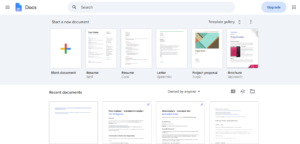
Google Docs remains the standard tool for writing and editing collaboration in content teams, and for good reason. It’s free, works on any device, saves automatically, and makes real-time collaboration between writers, editors, and clients straightforward. Comments and suggestions features mean clients can review content without emailing drafts back and forth.
For a Nigerian agency managing content for multiple clients, Google Docs’ ability to organise files in shared drives, with clearly named folder structures per client, keeps content operations predictable even across a distributed remote team.
What we like: The voice typing feature (Tools > Voice Typing) is underused but genuinely useful for Nigerian creators who think faster than they type and want to capture raw ideas quickly before refining them.
Pricing: Free with a Google account.
Graphic Design Tools
Visual content is non-negotiable on Instagram, TikTok, and Facebook, which are Nigeria’s three most active social platforms. These tools help you produce branded graphics without needing a full-time designer.
6. Canva
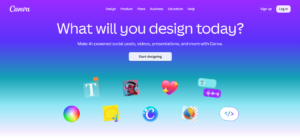
Canva is the most widely used graphic design tool for Nigerian businesses, and it genuinely earns that position. The free plan covers the majority of common social media graphic needs: Instagram posts and Stories, Facebook cover images, flyers, and basic presentations.
The Brand Kit feature in Canva Pro lets you upload your logo, set your brand colours and fonts, and have them automatically applied to every new design, which saves significant time when producing content at volume.
For Nigerian businesses doing product photography, Canva’s background remover (Pro) and Magic Resize features are consistently useful: remove the background from a product photo shot on a phone, then resize the resulting image for Instagram, WhatsApp status, and a Facebook marketplace post in one step.
What we like: Canva’s mobile app is well-optimised, which matters for Nigerian teams often working from phones rather than laptops, especially outside Lagos.
Pricing: Free plan available. Canva Pro at approximately $15/month (₦24,500). Many Nigerian users access Canva Pro through shared plans at a lower per-user cost.
7. Adobe Express
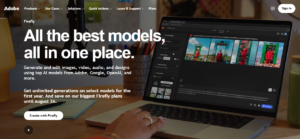
Adobe Express is Adobe’s more accessible creative tool, sitting between Canva and the full Adobe Creative Suite. It covers social media graphics, short video clips, and PDF creation with a template library that skews more toward polished, professional aesthetics than Canva’s consumer-oriented templates.
For Nigerian brands in sectors like real estate, finance, or professional services that need graphics to communicate credibility rather than just engagement, Adobe Express’s more restrained, professional template library is worth considering.
The integration with Adobe Fonts and Adobe Stock also gives you access to a broader asset library than Canva’s free plan.
What we like: Adobe Express’s one-click animation feature lets you add motion to static graphics without learning Adobe After Effects, which is useful for Instagram Stories and TikTok, which perform better with movement.
Pricing: Free plan available. Premium plan at approximately $10/month (₦16,400).
8. Remove.bg

Remove.bg does one thing: it removes image backgrounds automatically in seconds. For Nigerian product businesses photographing items at home or in the office, it’s the difference between a professional-looking product photo and one that looks improvised.
The practical workflow for most Nigerian SMEs is to photograph a product against whatever background is available, then run the image through Remove.bg to get a clean, transparent background version that can be placed on any branded Canva template. The entire process takes under two minutes.
What we like: The bulk processing feature lets you remove backgrounds from dozens of images at once, which is valuable for e-commerce sellers adding multiple products to an Instagram shop or a Jumia listing in a single session.
Pricing: Free for low-resolution downloads. Paid plans from approximately $8/month.
Video Creation Tools
Short-form video is the highest-reach organic content format on TikTok, Instagram, and Facebook in Nigeria right now. These tools help Nigerian businesses produce it without a video production team.
9. CapCut
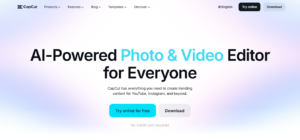
CapCut is the dominant video editing tool for Nigerian content creators, and for good reason. It’s fast, mobile-first, has a strong template and trending audio libraries, and its auto-caption feature generates accurate subtitles for videos with one tap.
For Nigerian brands where a lot of video content is filmed and edited directly on a phone, CapCut handles the full workflow from raw footage to a finished Reel or TikTok without any desktop software involved.
CapCut’s AI features have expanded significantly, including background removal, AI-generated captions with multiple style options, and voice-over generation that works reasonably well for explainer content.
The template library updates regularly with trending formats, which helps Nigerian brands produce content that feels native to the platform rather than out of step with what’s currently performing.
What we like: CapCut’s trending template section shows what’s currently performing well on TikTok globally, which is useful context for Nigerian creators trying to time format choices to platform trends.
Pricing: Free plan covers most needs. Pro plan at $19.99/month (approximately ₦33,000).
10. Descript
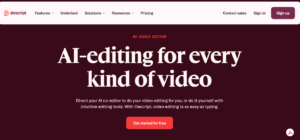
Descript takes a different approach to video editing: instead of working on a timeline, you edit the transcript. Delete a sentence from the text, and the video cuts that section automatically. This makes it the fastest tool for editing long-form content, like a podcast recording, client testimonial, or webinar, into shorter clips for social distribution.
For Nigerian agencies and content teams producing interview-based content, thought leadership videos, or founder conversations for LinkedIn, Descript dramatically reduces the time required to edit and repurpose long recordings into short, shareable clips. The AI filler word removal feature (deletes all “ums,” “ahs,” and awkward pauses with one click) alone saves significant editing time.
What we like: Descript’s “Underlord” AI can identify the most engaging segments of a long recording and suggest them as short clips, which removes a significant amount of judgment work from the editing process.
Pricing: Free plan available for limited use. Pro plan at $24/user/month (approximately ₦39,000).
11. InShot
InShot is the most practical mobile-first video editor for Nigerian creators who do everything on their phones. It’s lighter and faster to learn than CapCut, with a cleaner interface for basic trimming, speed adjustment, text overlay, and background music.
For business owners in Nigeria who want to produce simple, clean product videos or behind-the-scenes clips for Instagram without spending time on a complex editing app, InShot delivers results quickly.
InShot doesn’t have CapCut’s AI features or trending template library, but for simple content produced at speed, that simplicity is the advantage rather than a limitation.
What we like: InShot’s aspect ratio adjustment makes it easy to produce the same video in 9:16 (Stories and TikTok), 1:1 (Instagram feed), and 16:9 (YouTube) formats from a single edit, without re-editing for each platform.
Pricing: Free with watermark. Pro plan at approximately ₦6,500/month or ₦18,000/year.
Social Media Scheduling and Distribution Tools
Producing content is half the job. Getting it published consistently across multiple platforms without manual effort every day requires a scheduling system.
12. Buffer

Buffer is one of the most accessible social media scheduling tools for Nigerian teams, with a clean interface, solid mobile app, and pricing that doesn’t require a large marketing budget to justify. The free plan supports three channels and is functional for a small business managing its own Instagram, Facebook, and LinkedIn without agency support.
Buffer’s analytics show which posts performed best across each connected channel, with engagement data broken down by post type and time of day. The AI post generator can suggest caption variations for scheduled posts, which is useful when a content calendar needs to be filled quickly.
What we like: Buffer’s Start Page feature lets you create a simple, free landing page that consolidates all your links in one place, which is useful for the “link in bio” scenario that every Nigerian Instagram brand deals with.
Pricing: Free plan (3 channels). Paid plans from $6/channel/month (approximately ₦9,800/channel/month).
13. Metricool
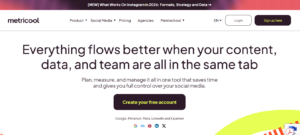
Metricool covers scheduling, analytics, and competitor tracking in one dashboard, which makes it a strong single-tool option for Nigerian businesses managing multiple social accounts.
Unlike Buffer, which is primarily a scheduling tool, Metricool’s free plan includes competitor tracking, which lets you see what your main competitors are posting and how their content performs without a separate subscription.
For Nigerian social media managers running multiple client accounts, Metricool’s unified dashboard across Instagram, TikTok, Facebook, LinkedIn, and X (fka Twitter) reduces the time spent logging into individual platforms to check performance.
Its best-time-to-post analysis is based on your own account’s historical performance rather than generic advice, which makes the recommendations more relevant to your specific audience.
What we like: The competitor tracking is included in the free plan, which means you can compare your posting frequency and engagement rate against competitors without paying for a separate analytics subscription.
Pricing: Free plan available. Paid plans from approximately $22/month (₦36,000).
Planning and Organisation Tools
The difference between a Nigerian business that produces content consistently and one that doesn’t usually isn’t creative ideas. It’s having a system to capture, organise, and execute those ideas before they disappear.
14. Notion
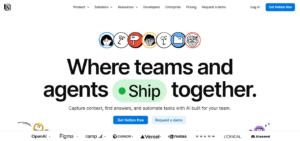
Notion functions as a flexible workspace that can handle a content calendar, editorial brief library, client record system, and idea dump all in one place. For Nigerian agencies managing content production for multiple clients, Notion’s database features let you build a structured content pipeline where every article, social post, or video has a status, owner, deadline, and brief attached to it, all visible from a single view.
The AI features in Notion can generate first drafts from brief notes, suggest content titles from topic descriptions, and summarise long research documents, which makes the planning phase faster for teams producing at volume.
The free plan covers individual use; the Plus plan at $10/month per user adds team collaboration and unlimited database features that make it genuinely useful for a multi-person content team.
What we like: Notion’s content calendar view shows every scheduled piece of content by date, type, and platform in a visual format that makes it easy to spot gaps or imbalances in your content mix before a week begins.
Pricing: Free for personal use. Plus plan at $10/user/month (approximately ₦16,400).
Analytics and Measurement Tools
Producing content without measuring what works is how Nigerian businesses end up posting consistently for months with no clear idea of whether any of it is generating customers.
15. Google Analytics 4
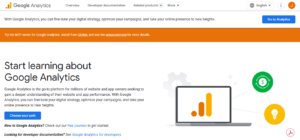
Google Analytics 4 (GA4) is the standard tool for measuring how your website content performs, and it’s free. For Nigerian businesses with a website or blog, GA4 shows which articles are generating traffic, where that traffic comes from (organic search, Instagram, WhatsApp links, direct), how long visitors stay on each page, and whether content visitors are converting to leads or customers.
The most valuable use of GA4 for Nigerian content teams is connecting content efforts to business outcomes. If your blog article on “Best Social Media Competitor Analysis Tools for Nigerian Businesses in 2026” is generating significant traffic but none of those visitors is clicking your contact page, that’s a specific insight you can act on: improve the call to action, add a product link, or create a follow-up article that moves the reader closer to a purchase decision.
What we like: GA4’s geographic breakdown lets you see exactly where your website visitors are coming from within Nigeria, which helps you understand whether your content is reaching the Lagos audience you’re targeting or predominantly reaching visitors from other regions.
Pricing: Free.
How to Build a Content Creation Stack for Your Nigerian Business
The right stack depends on your team size, your primary content format, and your budget. A few practical starting points:
If you’re a solo founder or early-stage startup managing content yourself, start with Google Trends (free), ChatGPT (free or $20/month), Canva free plan, CapCut free plan, and Buffer free plan.
That zero-to-minimal-cost stack covers research, writing assistance, design, video editing, and scheduling, which is enough to produce consistent content across two or three platforms without spending anything.
If you’re a growing brand or agency managing multiple accounts, add Metricool for competitor tracking and multi-platform analytics, Notion for editorial planning, and either Descript or a paid CapCut plan for video production that scales beyond basic short-form clips.
The investment typically runs ₦50,000 to ₦100,000 per month in software, which pays for itself if it’s replacing inconsistent content production with a reliable system.
The consistent thread across every well-run Nigerian content operation we’ve worked with through Oxgital’s digital marketing services is that the stack is secondary to the process. Two or three tools used daily with a clear workflow produce better content outcomes than ten tools used sporadically. Start small, build the habit, and add tools when you hit a specific bottleneck.
Frequently Asked Questions
What is the best free content creation tool for a Nigerian business with no budget?
Canva, Google Docs, ChatGPT, CapCut, and Buffer all have functional free tiers that cover the core content creation workflow: graphic design, writing, video editing, and scheduling. For most early-stage Nigerian businesses, this combination is sufficient to start producing consistent content across Instagram, Facebook, and WhatsApp without any software cost.
Which content creation tools work well on mobile for Nigerian creators?
CapCut, InShot, Canva, Buffer, and ChatGPT all have strong mobile apps designed for phone-first use. Since most Nigerian internet users, including business owners and their teams, work primarily on mobile, choosing tools with solid mobile experiences matters more here than in markets where desktop use dominates.
How do I choose between Canva and Adobe Express?
Canva is the stronger choice for most Nigerian SMEs because of its free plan, larger template library, and more active user community in Nigeria, which means more tutorials and resources in a Nigerian context. Adobe Express suits businesses that need a more professional, restrained aesthetic or that are already embedded in the Adobe ecosystem (Lightroom, Photoshop) and want consistency across tools.
Should Nigerian businesses use AI writing tools for social media content?
Yes, as first-draft assistance rather than final output. AI writing tools like ChatGPT can significantly speed up caption writing, email drafts, and blog outlines, but they require human editing to add brand voice, cultural specificity, and the local context that resonates with Nigerian audiences. Publishing AI-generated content without editing is what produces the generic, inauthentic content that Nigerian audiences (and algorithms) respond poorly to.
Conclusion
The best content creation tools for Nigerian businesses are the ones your team will actually use every week, not the ones with the longest feature list. For most Nigerian SMEs, a focused stack covering research (Google Trends), writing (ChatGPT and Grammarly), design (Canva), video (CapCut), scheduling (Buffer or Metricool), and planning (Notion) covers 90% of what consistent content production requires.
The businesses producing the most visible, high-performing content in Nigeria right now aren’t necessarily using the most sophisticated tools. They’re using a small number of tools consistently, with a clear process behind them. If your current content production feels chaotic, the fix is usually a better system rather than a new subscription.
If you want help building a content system that fits your business and actually connects to sales, reach out to the team at Oxgital, and we’ll map it out with you.